Tracking Rare Bird Movements: GPS and Radio Telemetry in Western Field Studies

Tracking a rare warbler through dense forest or following a raptor across mountain ranges requires more than binoculars and hope. Modern bird GPS tracking telemetry has transformed how ornithologists study movement patterns, habitat use, and migration routes. These technologies let researchers gather data that would be impossible to collect through observation alone.

Key Takeaway

Bird GPS tracking telemetry combines satellite positioning and radio frequency technology to monitor avian movements. Researchers must balance tag weight against bird size, choose between real-time and archival data collection, and understand battery limitations. Success depends on matching the tracking method to species behavior, study duration, and research questions while maintaining ethical standards for wild bird welfare.

Understanding GPS and Radio Telemetry Technologies

GPS tracking uses satellite signals to pinpoint a bird’s location with accuracy ranging from 5 to 30 meters. The tag receives signals from multiple satellites, calculates position through triangulation, and stores or transmits that data.

Radio telemetry works differently. A transmitter on the bird sends out radio signals at specific frequencies. Researchers use directional antennas and receivers to detect these signals and estimate the bird’s location through signal strength and direction.

Each technology has distinct advantages. GPS provides precise coordinates without requiring researchers to be nearby. Radio telemetry works in dense canopy where satellite signals fail, costs less, and allows lighter tags.

Battery life drives most equipment decisions. A GPS unit that logs positions every hour might last six months. Increase the fix rate to every ten minutes and battery life drops to six weeks. Radio transmitters can operate for years because they only broadcast a simple signal.

Choosing the Right Equipment for Your Species

Tracking Rare Bird Movements: GPS and Radio Telemetry in Western Field Studies — image 1

Tag weight matters more than any other factor. The standard rule is that tags should not exceed 3% of a bird’s body mass. A 30-gram songbird can carry a 0.9-gram tag. A 1,200-gram hawk can handle a 36-gram unit.

This weight restriction determines what technology you can use:

  • Birds under 50 grams typically require radio telemetry with lightweight VHF transmitters
  • Species between 50 and 150 grams can carry small GPS loggers that store data onboard
  • Birds over 150 grams may support GPS-GSM tags that transmit data via cellular networks
  • Large raptors and waterbirds can carry solar-powered satellite transmitters with multi-year lifespans

Attachment method affects both the bird and data quality. Leg-loop harnesses work well for waterfowl and raptors but can interfere with perching in songbirds. Backpack-style harnesses suit passerines but require careful fitting to avoid feather damage. Glue-on tags work for short-term studies but fall off during molt.

“The best tracking study is the one where the bird behaves normally. If your tag changes how the bird moves, feeds, or breeds, your data tells you about tagged birds, not about the species.” – Dr. Sarah Chen, Avian Ecologist

Comparing Tracking Methods for Field Studies

Different research questions require different tools. Here’s how the main technologies stack up:

Technology Position Accuracy Data Retrieval Battery Life Best For
VHF Radio 50-500m Manual tracking 1-3 years Small birds, dense habitat
GPS Logger 5-30m Recapture needed 3-12 months Migratory routes, site fidelity
GPS-GSM 5-30m Automatic via cell 1-6 months Real-time monitoring, accessible areas
GPS-Satellite 10-50m Automatic global 1-5 years Long-distance migration, remote regions

VHF radio telemetry remains the workhorse for many studies. Tags weigh as little as 0.3 grams. Researchers can track dozens of birds simultaneously by scanning different frequencies. The downside is labor. You need to be in the field with an antenna, following signals through brush and over ridges.

GPS loggers provide detailed movement data but require recapturing the bird. This works well for species with high site fidelity. Seabirds returning to nest colonies, raptors using the same winter territory, or residents that stay within a study area can all be recaptured with reasonable effort.

GPS-GSM tags send data through cell networks. You get near real-time positions without fieldwork. The catch is coverage. These tags go silent in wilderness areas without cell service and drain batteries faster when searching for signal.

Satellite transmitters offer global coverage and long deployments. They’re ideal for species that cross continents or oceans. The units are heavier and more expensive, limiting use to larger birds and well-funded projects.

Setting Up a Tracking Study

Planning determines success. Follow these steps before ordering equipment:

  1. Calculate the 3% body mass threshold for your species and identify compatible technologies
  2. Determine fix rate and study duration to estimate battery requirements
  3. Choose between archival data collection and real-time transmission based on recapture probability
  4. Test attachment methods on museum specimens or captive birds to refine your technique
  5. Obtain permits for capture, tagging, and data collection from relevant wildlife agencies
  6. Develop protocols for tag failure, including how to handle birds with non-functional units

Budget extends beyond tag purchase. A $300 GPS logger seems affordable until you add in capture equipment, permits, field time, and potential recapture efforts. Satellite transmitters cost $2,000 to $4,000 each, plus annual data fees of $500 to $1,000 per tag.

Sample size needs careful thought. Tagging three birds tells you about those individuals. Tagging thirty provides population-level insights. But thirty tags at $3,000 each plus data fees quickly exceeds most graduate student budgets.

Common Mistakes and How to Avoid Them

Researchers new to telemetry often encounter predictable problems. Learning from others’ experience saves time and improves data quality.

Overestimating battery life. Manufacturers test units under ideal conditions. Real-world performance falls short. Cold temperatures, frequent fix attempts in poor satellite visibility, and transmission overhead all drain batteries faster than spec sheets suggest. Plan for 60-70% of advertised battery life.

Underestimating tag impact. A tag that meets the 3% rule can still affect behavior if poorly attached. Watch tagged birds for several hours post-release. Do they preen normally? Fly with typical agility? Return to foraging within expected timeframes? If not, refine your attachment method.

Ignoring habitat effects on signal. GPS accuracy degrades under dense canopy. Radio signals bounce off cliff faces creating false bearings. Test your equipment in the actual study habitat before deploying tags on rare or difficult-to-catch species.

Failing to plan for data gaps. Tags malfunction. Birds die. Transmitters fall off during molt. Build redundancy into your study design. If you need data from ten birds for statistical power, tag fifteen.

Neglecting data management. A GPS tag collecting hourly positions for six months generates 4,300 data points per bird. Multiply by twenty birds and you have 86,000 positions to clean, validate, and analyze. Set up your database and analysis workflow before data starts arriving.

Interpreting Movement Data

Raw coordinates need context. A GPS point tells you where a bird was at a specific moment. Understanding what that location means requires additional layers.

Overlay positions on habitat maps. Does the bird prefer riparian corridors? Avoid agricultural fields? Concentrate activity near water sources? These patterns reveal habitat selection.

Calculate movement metrics. Daily displacement shows how far a bird travels. Minimum convex polygons or kernel density estimates define home range size. Turning angles and step lengths indicate foraging versus directed flight.

Temporal patterns matter. Nocturnal migrants show different movement during day versus night. Breeding birds restrict movements to territories while non-breeding individuals range widely. Seasonal shifts in range size often correlate with food availability or weather.

Compare tracked movements to expectations. If your species is thought to migrate through the Great Basin but tags show a coastal route, you’ve made a discovery. If home ranges are ten times larger than previous estimates, habitat quality in your study area may be poor.

Ethical Considerations in Avian Tracking

Tracking devices affect the animals we study. Responsible research minimizes harm while maximizing scientific value.

The 3% rule provides a starting point, not a guarantee of safety. Smaller percentages are better when possible. Some researchers use 2% for long-distance migrants that need peak flight performance.

Attachment duration should match study needs. Don’t deploy a three-year transmitter for a question answerable in six months. Breakaway attachments that release after a set period reduce long-term impacts.

Capture stress compounds tag effects. Minimize handling time. Use experienced bird banders. Have all equipment prepared before catching birds. Release immediately if a bird shows excessive stress.

Monitor tagged birds for adverse effects. If multiple individuals show reduced survival, breeding success, or body condition compared to controls, stop tagging and reassess your methods.

Share data responsibly. Precise locations of rare or threatened species can enable poaching or disturbance. Generalize locations in publications and restrict access to raw data.

Integrating Telemetry with Other Field Methods

Tracking data gains power when combined with complementary approaches.

Pair GPS locations with habitat surveys. Visit sites where birds concentrate and document vegetation structure, food availability, and microclimate. This grounds movement patterns in ecological mechanism.

Collect blood or feather samples during tagging. Stable isotope analysis reveals diet and geographic origin. Genetic data identifies population structure. Stress hormones indicate physiological condition.

Use accelerometers alongside GPS. These sensors detect wing beats, head movements, and body orientation. The data distinguishes flying, foraging, and resting, adding behavioral context to locations.

Combine individual tracking with population surveys. Telemetry shows where birds go. Surveys reveal how many use each area and whether tracked individuals represent typical behavior.

Deploy automated radio telemetry stations. These fixed receivers log signals from VHF tags continuously, filling gaps between manual tracking sessions and detecting mortality through lack of movement.

Advancing Your Research with Better Data

Technology improves constantly. Tags get lighter, batteries last longer, and sensors add new data streams. Staying current helps you design better studies.

Solar panels extend deployment duration dramatically. A GPS-GSM tag with solar charging can operate indefinitely on large birds, tracking full annual cycles and multi-year site fidelity.

Miniaturized accelerometers now fit in sub-gram packages. Researchers can measure wingbeat frequency in songbirds, quantifying flight costs and identifying foraging modes.

Altitude sensors add a vertical dimension. Raptors using thermals, migrants selecting flight altitudes, and seabirds diving for fish all show three-dimensional habitat use.

Two-way communication allows remote tag programming. Researchers can adjust fix rates based on bird behavior, increasing resolution during interesting movements and conserving battery during stationary periods.

Automated data processing reduces the time from tag deployment to analysis. Cloud-based platforms ingest GPS data, filter errors, calculate movement metrics, and generate visualizations without manual spreadsheet work.

Making Tracking Work for Conservation

The best telemetry studies inform management decisions and species recovery.

Identify migration bottlenecks where birds concentrate and face high mortality. Protect these sites and mortality drops across the population.

Document habitat use during non-breeding periods. Many species decline because of degradation in wintering areas or stopover sites thousands of miles from breeding grounds.

Quantify responses to disturbance. Do birds avoid wind farms? Abandon nests near recreation areas? Change foraging behavior after prescribed fires? Tracking provides objective evidence.

Test management effectiveness. Did that habitat restoration project actually increase use by target species? Do protected areas encompass the full home ranges of residents? Telemetry answers these questions.

Engage the public with tracking data. Maps showing migration routes or real-time positions build support for conservation. People connect with individual birds and care about protecting the places they use.

Building Skills for Successful Field Telemetry

Tracking studies require diverse expertise. Develop these skills for better research outcomes.

Practice bird capture techniques before your study begins. Volunteer with banding stations. Take workshops on mist netting, trapping, and handling. Competence reduces stress for both you and the birds.

Learn basic electronics. Understanding how tags work helps you troubleshoot problems. You’ll recognize when a tag is malfunctioning versus when a bird has moved into poor coverage.

Master GIS software. You’ll spend more time analyzing location data than collecting it. Proficiency in spatial analysis tools makes this work efficient and rigorous.

Study statistics appropriate for movement data. Auto-correlation, habitat selection functions, and state-space models all require specialized knowledge. Take courses or work with quantitative collaborators.

Join the telemetry community. Conferences, email lists, and online forums connect researchers facing similar challenges. Shared experiences prevent repeated mistakes and accelerate learning.

Tracking Technology Serves Field Biology

Bird GPS tracking telemetry transforms questions into data. Where do birds go when they leave the breeding grounds? How large a territory do they need? Which habitats support the highest survival?

These technologies work best when researchers match tools to questions, respect animal welfare, and combine tracking with complementary methods. A well-designed telemetry study produces insights impossible to gain through observation alone.

Start small if you’re new to tracking. Deploy a few tags on a common species to learn the workflow. Build expertise with capture, attachment, data management, and analysis. Then scale up to rarer species and more complex questions.

The birds you track will surprise you. They’ll use habitats you didn’t expect, travel farther than predicted, and behave in ways that challenge assumptions. That’s the beauty of letting the birds tell their own stories through the data they carry.

Why Habitat Assessment Matters: Linking Bird Populations to Western Ecosystem Health

Bird populations tell stories that landscapes cannot speak alone. When you measure vegetation structure, water availability, and canopy cover, you create a language that translates directly into species presence, breeding success, and community composition. For conservation biologists working across western ecosystems, habitat assessment bird populations research forms the backbone of evidence-based land management.

Key Takeaway

Habitat assessment bird populations research connects physical landscape metrics to avian community health. Effective protocols measure vegetation structure, food resources, and disturbance patterns while tracking [species richness](https://en.wikipedia.org/wiki/Species_richness), abundance, and breeding success. These paired datasets reveal ecosystem functionality better than either measurement alone, enabling targeted conservation actions across western habitats from sagebrush steppe to montane forests.

Why Birds Function as Ecosystem Indicators

Birds respond rapidly to habitat changes. A single breeding season can show population shifts that reflect alterations in vegetation structure, insect abundance, or water availability.

Avian species occupy specific ecological niches. Cavity nesters require standing dead trees. Ground foragers need open understory. Aerial insectivores depend on flying insect populations sustained by native plant communities.

When you document which species appear where, you map habitat quality across spatial scales. A sage thrasher presence indicates intact sagebrush with appropriate shrub height and density. Yellow-billed cuckoo detections signal riparian corridors with multi-layered canopy structure.

These relationships work because birds integrate multiple habitat variables simultaneously. They filter food availability, nest site suitability, predation risk, and microclimatic conditions through their presence or absence.

Core Habitat Metrics That Drive Avian Diversity

Vegetation structure matters more than species composition alone. Foliage height diversity predicts bird species richness across most western ecosystems.

Measure vertical complexity by recording vegetation contacts at multiple height intervals. Use a profile board or laser rangefinder to quantify layers from ground cover through canopy.

  • Canopy cover percentage
  • Shrub layer density and height
  • Herbaceous ground cover
  • Standing dead tree density
  • Downed woody debris volume
  • Bare ground percentage

Water availability shapes community composition dramatically. Riparian obligates disappear when perennial flow becomes intermittent. Wetland specialists track hydroperiod duration and depth.

Food resource proxies include flowering plant density for nectar feeders, seed-producing forb abundance for granivores, and arthropod biomass for insectivores. Sweep net samples or sticky traps quantify invertebrate availability during breeding season.

Disturbance indicators reveal management impacts. Livestock grazing intensity, fire history, invasive plant cover, and human activity levels all correlate with shifts in bird community structure.

Field Protocols for Paired Assessment

Successful habitat assessment bird populations studies require synchronized data collection. Conduct bird surveys and habitat measurements within the same timeframe, ideally during peak breeding season.

  1. Establish standardized point count locations across your study area
  2. Complete bird surveys during optimal detection windows (dawn, calm conditions)
  3. Measure habitat variables within fixed radius plots centered on each point
  4. Repeat measurements across multiple visits to capture temporal variation
  5. Document environmental conditions that affect detection probability

Point count methodology provides repeatable avian data. Five-minute counts with 50-meter fixed radius work well in most western habitats. Record all birds detected by sight or sound, noting distance bands for density estimation.

Habitat plots should match your bird survey radius. Measure the same variables at every location to enable statistical comparison. Photograph plot centers in cardinal directions for change documentation.

Timing coordination matters because bird presence reflects current habitat conditions. Surveys conducted in May assess breeding habitat quality. The vegetation structure present then determines nest site availability and foraging success.

Analytical Approaches That Reveal Relationships

Species richness provides the simplest metric. Count unique species detected per point. Compare richness across habitat types or management treatments.

Abundance indices require distance sampling or removal models to account for detection probability. Not all birds present get detected. Adjust counts using statistical corrections.

Community composition analysis identifies which species assemblages associate with specific habitat conditions. Ordination techniques like NMDS position survey points in multivariate space based on species presence and abundance.

Analysis Type Data Required Primary Output Best Use Case
Species richness Presence/absence Count of species Broad diversity comparison
Abundance modeling Distance data Density estimates Population trends
Occupancy analysis Repeat visits Detection-corrected presence Rare species monitoring
Community ordination Full species matrix Assemblage patterns Habitat relationships

Occupancy modeling separates detection probability from true presence. This approach works well for secretive species or low-density populations where absence could mean undetected rather than truly absent.

Indicator species analysis identifies birds strongly associated with particular habitat conditions. These species serve as monitoring shortcuts. Detect the indicator, infer the habitat quality.

Western Ecosystem Applications

Sagebrush steppe assessment focuses on shrub structure. Measure big sagebrush height, canopy cover, and spatial patchiness. Brewer’s sparrow, sage thrasher, and sagebrush sparrow abundance tracks these metrics closely.

Herbaceous understory matters too. Native perennial bunchgrasses support different arthropod communities than invasive annual grasses. Greater sage-grouse broods depend on forb-rich areas with specific height structure.

Riparian corridor health shows clearly in bird communities. Yellow warbler, song sparrow, and black-headed grosbeak require multi-layered woody vegetation. Willow flycatcher needs dense shrub thickets with standing water nearby.

Measure riparian zone width, canopy closure, shrub density by height class, and distance to water. These variables predict breeding bird density better than simple presence/absence of water.

Montane forest structure drives woodpecker diversity. Standing dead tree density, diameter distribution, and decay class determine cavity availability. Measure snag characteristics within fixed plots.

“The most valuable habitat assessments measure what birds actually use, not what we assume they need. Let species detections guide which variables matter most in your system.” – Field ecologist with 20 years monitoring Sierra Nevada bird communities

Aspen stand condition assessment uses cavity-nesting bird guilds. Tree swallow, mountain bluebird, and red-naped sapsucker presence indicates adequate snag recruitment and canopy structure.

Common Mistakes That Undermine Results

Mismatched spatial scales cause weak correlations. Measuring habitat in a 10-meter plot while counting birds across 100 meters creates analytical noise.

Match your habitat measurement area to bird detection distances. If most detections occur within 50 meters, measure habitat within that same radius.

Temporal misalignment weakens relationships. Bird surveys in June paired with vegetation measurements in August miss the habitat conditions birds actually selected.

Survey during the same period. Vegetation changes through the growing season. Early migrants assess different conditions than late nesters.

Inadequate replication limits statistical power. Three survey points cannot reveal meaningful patterns. Aim for 30+ locations minimum to detect moderate effect sizes.

Ignoring detection probability biases abundance estimates. Dense vegetation reduces detection rates. Windy conditions mask vocalizations. Different observers have different skills.

Use standardized protocols and record conditions that affect detection. Apply statistical corrections or focus on presence/absence if abundance estimates seem unreliable.

Measuring irrelevant variables wastes effort. Not every habitat feature matters to every species. Pilot data helps identify which metrics correlate with your target bird community.

Integrating Remote Sensing Data

LiDAR data quantifies vegetation structure across large areas. Canopy height models, vegetation density profiles, and gap fraction metrics all derive from airborne laser scanning.

Ground-truth LiDAR products with field measurements at subset locations. Once validated, apply relationships across entire study areas to predict bird habitat suitability.

Satellite imagery provides land cover classification and vegetation indices. NDVI tracks photosynthetic activity as a proxy for productivity. Classify imagery into habitat types then validate with bird surveys.

Drone-based imagery offers intermediate scale assessment. Capture high-resolution imagery and structure-from-motion point clouds for individual management units.

Combine remote sensing efficiency with field survey precision. Use remotely sensed data to stratify landscapes, then concentrate field effort in representative locations.

Adaptive Management Applications

Baseline assessment before management action enables impact evaluation. Survey bird populations and measure habitat before grazing changes, prescribed fire, or restoration planting.

Post-treatment monitoring reveals response trajectories. Some species respond within one breeding season. Others require multiple years as vegetation structure develops.

Control sites provide essential context. Changes at treatment locations mean little without knowing what happened at comparable untreated areas during the same period.

Design monitoring to answer specific questions:

  • Did thinning increase canopy gap area and ground-foraging bird abundance?
  • Does livestock exclusion allow shrub layer recovery and associated bird species return?
  • Are riparian plantings developing structure that supports target species?

Adjust management based on monitoring results. If bird response falls short of objectives, modify treatment intensity, timing, or configuration.

Iterative cycles of assessment, action, and monitoring characterize adaptive management. Habitat assessment bird populations data drives decisions when collected consistently over time.

Building Long-Term Datasets

Consistent methodology enables trend detection. Use the same survey protocol, habitat measurement techniques, and spatial locations across years.

Protocol changes break time series. If you must modify methods, conduct parallel measurements during a transition period to calibrate old and new approaches.

Archive raw data with complete metadata. Future analysts need to know exact survey dates, weather conditions, observer identity, and measurement techniques.

Photograph monitoring locations systematically. Repeat photos from marked points document vegetation change better than memory or written descriptions.

Collaborate across jurisdictions to build regional datasets. Bird populations and habitat conditions operate at landscape scales. Individual project areas provide limited inference.

Contribute data to regional monitoring networks and citizen science platforms. Aggregated datasets reveal patterns invisible in single-study results.

Training Observers for Reliable Data

Bird identification skills determine data quality. Invest in observer training before launching surveys. Audio recordings and field quizzes calibrate skills.

Conduct simultaneous independent surveys to measure observer agreement. Calculate detection concordance and species identification accuracy.

Habitat measurement requires calibration too. Multiple observers measuring the same plot should produce similar values. Practice together until measurements converge.

Written protocols prevent drift over time. Document exact measurement techniques, equipment specifications, and decision rules for ambiguous situations.

Annual refresher training maintains consistency when field seasons span multiple years. Review protocols, practice measurements, and discuss challenging identification scenarios.

Communicating Results to Land Managers

Translate statistical outputs into management-relevant language. Land managers need to know which actions improve habitat for which species, not p-values and confidence intervals.

Maps show spatial patterns clearly. Display bird diversity hotspots, habitat quality gradients, and treatment response areas visually.

Before-after comparisons work better than regression coefficients for most audiences. Show how bird communities changed following management with simple graphs.

Highlight indicator species that managers recognize. Charismatic or game species often carry more weight than total species richness metrics.

Provide actionable recommendations:

  • Maintain snag densities above 5 per acre for cavity-nesting guilds
  • Restore native shrub cover to 25% for sagebrush-associated species
  • Protect riparian buffers at least 50 meters wide for breeding migrants

Link bird population responses to broader ecosystem functions. Insectivorous birds suppress herbivorous insects. Seed dispersers facilitate plant community dynamics. Scavengers cycle nutrients.

Making Habitat Assessment Work for Your Landscape

Field-tested protocols matter more than perfect theoretical frameworks. Start with established methods, then adapt to your specific ecosystems and management questions.

Pair bird surveys with habitat measurements from day one. Retrospective correlation attempts rarely succeed because you cannot reconstruct past habitat conditions accurately.

Focus measurement effort on variables birds actually use. Pilot data reveals which metrics correlate with species presence. Drop measurements that show no relationship.

Build partnerships with land managers early. Their questions should shape your monitoring design. Their observations add context your data cannot capture alone.

Commit to multi-year timelines. Single-season snapshots miss natural variation and treatment response lags. Plan for sustained effort before starting.

Your habitat assessment bird populations data becomes most valuable when shared, applied, and built upon over time. Consistent monitoring transforms individual projects into cumulative knowledge that strengthens conservation across western landscapes.

Aging and Sexing Birds in the Field: A Practical Guide for Western Species

Standing in the field with binoculars trained on a warbler, you face a challenge that separates casual observers from serious ornithologists. That bird flitting through the willows could be a hatch year female, an adult male in basic plumage, or something in between. Getting it right matters for banding data, population studies, and conservation decisions that depend on accurate demographic information.

Key Takeaway

Aging and sexing birds requires systematic observation of plumage characteristics, molt patterns, bare part coloration, and behavioral cues. Success depends on understanding species-specific timing of [molt cycles](https://en.wikipedia.org/wiki/Moulting), recognizing subtle feather wear patterns, and combining multiple field marks rather than relying on single characteristics. Practice with known individuals builds the pattern recognition essential for accurate field determinations.

Understanding the Molt Calendar

Birds replace their feathers on predictable schedules. This biological rhythm gives you the foundation for aging birds accurately.

Most passerines undergo a complete prebasic molt after breeding. Juveniles grow their first set of real feathers, then many species perform a partial preformative molt that replaces some body feathers but retains juvenile flight feathers. This creates a contrast you can see in the field.

Adult birds typically show uniform feather generation across their plumage. Hatch year birds often display a mix of fresher body feathers and more worn wing feathers. The difference becomes obvious when you know where to look.

Timing matters enormously. A bird photographed in July with heavily worn primaries tells a different story than one seen in October with the same wear pattern. Learn the molt schedules for your target species. Some warblers complete their prebasic molt before migration. Others wait until they reach wintering grounds.

Primary Field Marks for Aging

Aging and Sexing Birds in the Field: A Practical Guide for Western Species — image 1

Certain anatomical features reliably indicate age across many species. These marks form your first line of assessment.

Skull pneumatization works brilliantly for passerines during fall banding. Hatch year birds show incomplete ossification visible through the thin skin on top of the skull. The “window” appears as pink or translucent patches between bone ridges. By late winter, most skulls complete pneumatization and this mark disappears.

Flight feather shape and wear provide year-round clues. Juveniles often show narrower, more tapered primaries and rectrices compared to adults. The feather tips may appear more pointed. Wear patterns differ too because juvenile feathers endure months of use before the first prebasic molt.

Mouth and gape color help with nestlings and recently fledged birds. Many species show bright yellow or orange gape flanges that fade as birds mature. This mark has limited utility after the first few weeks of independence.

Iris color changes predictably in some species. Gulls provide classic examples, with dark eyes in juveniles transitioning to pale yellow in adults over several years. Raptors show similar patterns, though the timeline varies by species.

Sex Determination Through Plumage

Sexual dimorphism varies wildly across bird families. Your approach must adapt to each species.

Dichromatic Species

Males and females wear obviously different plumages in many birds. Ducks, tanagers, and most orioles make sex determination straightforward during breeding season. The challenge arrives when these species wear basic plumage or when you encounter immature birds.

Hatch year males of dichromatic species often show intermediate plumage. They may display patches of adult male coloration mixed with female-type feathers. These birds create identification puzzles that require careful observation of multiple features.

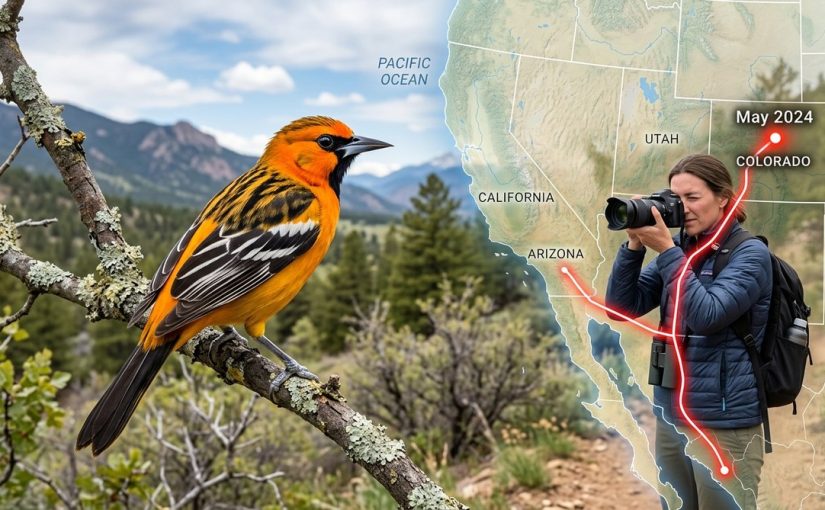
Female plumage typically remains consistent across age classes. A female Bullock’s Oriole looks similar whether she hatched this year or five years ago. Males progress through distinct stages, gaining brightness and pattern definition with each molt cycle.

Monochromatic Species

Species where both sexes appear similar demand subtler observations. Small differences in size, proportions, or behavior become your tools.

Many flycatchers, sparrows, and vireos fall into this category. Males may average slightly larger or show marginally brighter plumage tones. These differences exist on a spectrum with substantial overlap. Individual variation can exceed sexual variation.

Behavioral cues gain importance here. Singing indicates males in most species, though female song occurs more commonly than once believed. Nest building, incubation patterns, and territorial behavior all provide context clues when plumage fails you.

Molt Limits and Feather Contrast

Aging and Sexing Birds in the Field: A Practical Guide for Western Species — image 2

The concept of molt limits revolutionized field aging techniques. This method works across countless species once you understand the principle.

  1. Locate the boundary between feather generations on the wing
  2. Identify which feathers appear fresher or differently colored
  3. Determine which molt strategy explains the pattern you observe
  4. Apply species-specific knowledge about typical molt extents

Hatch year birds that undergo partial preformative molts create visible contrasts. Their replaced greater coverts look fresh and richly colored. The retained juvenile primaries and primary coverts appear browner and more worn. The boundary between these feather tracts shows as a clear line.

Adult birds completing full prebasic molts show no such contrast. All wing feathers match in color, wear, and quality. This uniformity confirms adult status.

Feature Hatch Year After Hatch Year Adult
Wing feather uniformity Mixed generations present Usually uniform Always uniform
Greater covert color Often contrasts with primaries Matches flight feathers Matches flight feathers
Primary wear Moderate to heavy by fall Light to moderate Light after molt
Skull ossification Incomplete until late fall Complete Complete

Bare Part Examination

Legs, bills, and orbital rings change color as birds mature. These features complement plumage assessment.

Gulls demonstrate this principle dramatically. A first cycle gull shows pink legs and a dark bill. Second cycle birds develop paler legs and limited adult bill pattern. Third cycle individuals approach adult bare part coloration. The progression takes years and provides reliable aging criteria.

Shorebirds display seasonal bare part color changes tied to breeding condition. Bright orange or red legs during spring indicate breeding adults. Duller coloration suggests non-breeding plumage, which could indicate either out-of-season adults or immature birds.

Bill color shifts happen in many species. Starlings transition from dark juvenile bills to yellow adult bills. Crows show subtle gape color differences between young and old birds. Even small changes matter when you train yourself to notice them.

Behavioral Indicators

How a bird acts provides supporting evidence for age and sex determinations.

Juveniles often show less wariness than adults. They make mistakes, land in odd places, and sometimes approach observers more closely. This naivety reflects inexperience, not stupidity. Young birds are still learning which situations pose real danger.

Foraging efficiency improves with age. Adults capture prey more successfully and waste less energy on unproductive attempts. Watching a bird hunt can reveal its experience level.

Vocalizations develop over time in many species. Song complexity, delivery rate, and repertoire size often increase as males mature. Some species require multiple seasons to perfect their full song. Others learn quickly but refine details throughout their lives.

Social dominance hierarchies sometimes correlate with age. Older birds may claim better feeding positions or defend resources more successfully. These patterns vary by species and context.

Common Mistakes and How to Avoid Them

Field determinations go wrong in predictable ways. Recognizing these pitfalls improves your accuracy.

Relying on single characters causes frequent errors. A bright bird is not automatically male. A dull bird is not necessarily female or immature. Always combine multiple features before reaching conclusions.

Ignoring seasonal timing leads to misidentifications. Plumage that indicates hatch year status in September may be impossible to age by March. Molt schedules and feather wear change the available evidence throughout the year.

Applying one species’ pattern to another creates problems. Just because Western Tanagers show obvious sexual dimorphism does not mean all tanagers do. Each species evolved its own strategy. Learn them individually.

Overlooking variation happens when you expect all individuals to match field guide illustrations. Real birds show wear, staining, individual variation, and occasional aberrant plumage. Allow for natural diversity.

“The best field ornithologists build mental libraries of variation through thousands of observations. They know what normal looks like across seasons and age classes. That foundation lets them spot the unusual and correctly interpret ambiguous birds.” – Peter Pyle, ornithological researcher

Practical Steps for Field Assessment

Apply a systematic approach to each bird you attempt to age or sex.

  1. Note the date and location to establish seasonal context
  2. Observe overall plumage brightness and pattern
  3. Examine wing feathers for molt limits and wear patterns
  4. Check bare parts for color and any age-related changes
  5. Watch behavior for clues about experience level
  6. Combine all observations before making a determination
  7. Photograph diagnostic features when possible for later review
  8. Record uncertainty honestly in your notes

Photography has transformed field aging and sexing work. Capturing images of wing spread, undertail coverts, and head patterns lets you examine details impossible to see clearly through binoculars. Build a reference collection of known-age birds to sharpen your eye.

Practice with birds in the hand accelerates learning. Banding stations offer opportunities to handle individuals and examine features up close. The patterns you learn through tactile examination translate back to field observations.

Species-Specific Resources

General principles only carry you so far. Detailed species accounts provide the specific criteria that matter.

The aging and sexing birds in the field guide covers western North American species with photographs and detailed descriptions of diagnostic features. These references compile decades of banding data and field observations into practical identification criteria.

Regional variation affects many species. West Coast populations may show different molt timing or plumage characteristics than Great Basin or Rocky Mountain birds. Consult resources specific to your study area.

Rare species and vagrants present special challenges. Limited data exists for some birds, particularly regarding immature plumages or out-of-range molt timing. Approach these situations with appropriate caution and document thoroughly.

Building Your Skills Over Time

Competence at aging and sexing birds develops through sustained effort. No one masters these techniques overnight.

Start with common, sexually dimorphic species where the answers are obvious. Yellow Warblers, American Goldfinches, and Red-winged Blackbirds provide excellent practice subjects. Build confidence with straightforward identifications before tackling difficult species.

Progress to monochromatic species once you understand molt patterns and timing. Sparrows offer endless opportunities for practice. Their abundance means you can observe many individuals and start recognizing subtle patterns.

Challenge yourself with gulls or raptors that take years to reach adult plumage. These birds teach patience and attention to detail. The complex progression of plumages demands careful observation and systematic note-taking.

Keep detailed records of your observations. Note which features you used to make each determination and how confident you felt. Review your notes periodically to identify patterns in your decision-making and areas needing improvement.

When Certainty Remains Out of Reach

Some birds defy definitive aging or sexing in the field. Accept this reality rather than forcing uncertain conclusions.

Worn plumage obscures diagnostic features. A bird in heavy molt may lack the feathers you need to see. Poor lighting or brief views limit what you can observe. Environmental factors sometimes make accurate determination impossible.

Record these birds as unknown age or unknown sex. Your data remains valuable even without complete demographic information. Honest uncertainty serves science better than confident guesses.

Photographic documentation helps in ambiguous cases. Share images with experienced observers or post them to identification forums. Collective expertise often resolves difficult birds that stump individual observers.

Making Field Determinations Count

The techniques you develop serve purposes beyond personal satisfaction. Accurate aging and sexing data drives conservation and research.

Breeding bird surveys benefit from sex ratio information. Skewed ratios may indicate habitat quality issues or population stresses. Your observations contribute to larger pattern recognition.

Migration monitoring stations track age ratios to assess reproductive success. Years with low proportions of hatch year birds signal poor breeding seasons. This early warning system helps managers respond to population changes.

Banding operations rely on accurate aging to calculate survival rates and population models. Every bird you age correctly strengthens the dataset that informs management decisions.

Citizen science projects increasingly incorporate age and sex data. Your skills let you contribute higher quality observations that researchers can use with confidence.

Sharpening Your Eye for Detail

Field ornithology rewards those who notice small differences and patterns. The warbler that looks plain at first glance reveals its story through careful observation.

Train yourself to see feather edges, not just overall color. The thin pale fringe on a greater covert matters. The shape of a primary tip tells you something. These details separate competent observers from experts.

Compare birds directly when possible. Two goldfinches feeding together may show age or sex differences invisible when viewing individuals separately. Context and comparison sharpen discrimination.

Study specimens when opportunities arise. Museum collections let you examine plumage details impossible to see on living birds. The investment of time with study skins pays dividends in field identification skills.

Return to the same locations across seasons. Watching how individual birds change through molt cycles builds intuition about timing and progression. That knowledge becomes automatic with repetition.

Your ability to determine bird age and sex accurately opens doors to deeper understanding. Each correctly identified individual adds to your mental library of variation and possibility. The field becomes richer as your skills grow, revealing stories written in feathers, behavior, and the rhythms of avian life cycles.

Mist Netting Ethics and Techniques for Studying Western Songbird Migration

Capturing wild songbirds for research requires precision, patience, and respect for the animals in your care. Mist netting remains the gold standard for studying migration patterns, morphometrics, and population dynamics across North America. Done correctly, it yields invaluable data while minimizing stress to birds. Done poorly, it risks injury or death.

Key Takeaway

Mist netting techniques for songbirds involve strategic net placement, frequent monitoring intervals, gentle extraction methods, and standardized data collection. Ethical protocols require proper permits, training under experienced banders, and prioritizing bird welfare over data collection. Success depends on understanding target species behavior, habitat preferences, and seasonal migration timing to maximize capture efficiency while minimizing stress.

Understanding mist net fundamentals

Mist nets consist of fine mesh suspended between poles, creating nearly invisible barriers that temporarily entangle birds for scientific study. The standard 12-meter net with four shelves works well for most songbird projects, though 6-meter and 18-meter variants suit specific terrain or target species.

Mesh size matters significantly. A 30mm mesh catches warblers and sparrows effectively. A 36mm mesh better suits thrushes and tanagers. Using inappropriate mesh sizes leads to either missed captures or dangerous overcapture of non-target species.

Net height depends on your study goals. Ground-level placement targets species like towhees and sparrows. Mid-canopy placement requires extension poles and captures migrants moving through oak or willow thickets. Canopy netting demands specialized training and equipment beyond most banding stations.

Shelf depth creates pockets where birds fall after striking the net. Deeper pockets prevent escapes but require more skill to extract birds safely. Shallow pockets allow quick removal but increase escape rates, especially with strong fliers like flycatchers.

Site selection and net placement strategies

Mist Netting Ethics and Techniques for Studying Western Songbird Migration — image 1

Choosing where to place nets determines capture success more than any other factor. Songbirds follow predictable movement patterns based on habitat edges, water sources, and vegetation structure.

Habitat funnels concentrate migrants naturally. A narrow corridor between forest and wetland forces birds through a confined space. Placing nets across these bottlenecks maximizes captures during peak migration.

  • Position nets perpendicular to habitat edges
  • Target areas with dense understory vegetation on one side
  • Avoid completely open areas where birds easily see and avoid nets
  • Use natural flight paths between feeding and roosting areas
  • Consider sun angle to minimize net visibility during peak activity hours

Water features attract migrants for drinking and bathing. A net line 10 to 15 meters from a stream or pond intercepts birds approaching water. Morning captures peak here as birds rehydrate after overnight flights.

Vegetation density on the approach side matters enormously. Birds flying from dense cover into open areas rarely see nets until too late. Nets visible from 20 meters away catch far fewer birds.

Wind direction affects capture rates more than most researchers expect. Birds prefer flying into headwinds during migration, using updrafts for energy efficiency. Nets perpendicular to prevailing winds during migration season outperform other orientations.

Net setup protocols that prevent injury

Proper net tensioning prevents most extraction difficulties and injuries. Nets too tight create small pockets that compress birds. Nets too loose tangle birds in multiple mesh layers.

  1. Stretch the top trammel line taut between poles
  2. Attach shelf lines with moderate tension, allowing 15 to 20 cm sag
  3. Secure bottom trammel line loosely, permitting pockets to form naturally
  4. Check all knots and pole stability before opening nets
  5. Walk the net line to identify and remove any twigs or debris

Pole placement requires attention to ground conditions. Soft soil needs deeper insertion or guy lines for stability. Rocky ground may require specialized pole shoes or alternative anchoring methods.

Net lanes should remain clear of vegetation that could push nets sideways or create additional entanglement points. Trim branches within one meter of the net path, but avoid creating obvious clearings that alert birds.

Ground clearance affects which species you capture. Nets with bottom edges at ground level catch ground-foraging species. Raising the bottom edge 30 to 50 cm reduces captures of non-target species like quail or roadrunners while maintaining effectiveness for aerial insectivores.

Extraction techniques for different entanglement scenarios

Mist Netting Ethics and Techniques for Studying Western Songbird Migration — image 2

Speed and gentleness balance during extraction. Moving too slowly stresses birds unnecessarily. Rushing causes feather damage or limb injuries.

The standard extraction begins by securing the bird’s head gently between your index and middle fingers. This prevents biting and calms most species immediately. Support the body with your other hand while assessing entanglement severity.

Simple captures involve one or two body parts with minimal mesh wrapping. Remove these by tracing each mesh strand to its origin and lifting it over the caught appendage. Never pull mesh away from the bird’s body, as this tightens loops.

Complex entanglements require systematic unwrapping. Start with the wings, freeing primary and secondary feathers individually. Move to legs next, carefully unwinding mesh from tarsi and toes. Save the head for last, as most birds remain calmer while still partially restrained.

“The mark of an experienced bander isn’t how fast they extract birds, but how rarely they need help with difficult extractions. Slow down, think through the tangle, and work methodically.” — Master Bander, Point Reyes Bird Observatory

Hummingbirds present unique challenges due to their tiny size and rapid metabolism. Use magnification if available. Work in shade to prevent overheating. Complete extraction within 60 seconds when possible.

Raptors occasionally hit nets, especially Sharp-shinned Hawks pursuing songbirds. Use heavy leather gloves. Control the feet first. Expect aggression. Consider whether your permit covers raptor handling before opening nets in areas with high hawk activity.

Monitoring schedules and weather considerations

Net check intervals directly impact bird welfare. Thirty-minute checks represent the maximum acceptable interval for most conditions. Fifteen-minute intervals suit hot weather, exposed locations, or high-traffic nets.

Temperature extremes require modified protocols. Above 32°C, reduce check intervals to 10 minutes or close nets entirely. Below 5°C, monitor for hypothermia risk, especially with wet plumage.

Weather condition Maximum check interval Special considerations
Clear, mild (15-25°C) 30 minutes Standard protocols apply
Hot (above 28°C) 15 minutes Provide shade for processing
Cold (below 10°C) 20 minutes Check for hypothermia signs
Light rain 20 minutes Close if plumage saturation occurs
Wind above 20 km/h Close nets Entanglement severity increases
Fog or mist 15 minutes Net visibility decreases

Predator activity necessitates constant vigilance. Cats, foxes, and snakes learn to check nets for easy meals. Some stations use predator guards or elevated net placement in high-risk areas.

Dawn represents peak capture time for most songbird species. Open nets 30 minutes before sunrise. Activity typically declines by mid-morning, though migration fallout conditions can produce captures throughout the day.

Data collection standards and aging techniques

Standardized measurements enable comparison across studies and decades of banding records. Consistency matters more than precision to the nearest tenth of a millimeter.

Wing chord measurement uses the flattened, straightened method for most passerines. Flatten the wing against a ruler with the wrist joint at zero. Straighten without stretching. Record the longest primary tip measurement. This single measurement provides age and sex clues for many species.

Tail length helps separate similar species and age classes. Measure from the point where central rectrices emerge from skin to the tip of the longest feather. Worn or molting tails require notation.

Mass measurements need calibration checks daily. Pesola scales drift over time. Use a known weight each morning. Record mass to the nearest 0.1 gram for small species, 0.5 gram for larger birds.

  • Bill length from anterior edge of nares to tip
  • Bill depth at anterior nares edge
  • Tarsus length from notch to last complete scale
  • Fat score using standardized 0-5 scale
  • Skull pneumatization percentage for aging

Aging songbirds relies primarily on plumage characteristics and skull ossification. Hatch-year birds show pointed rectrices, loosely textured body feathers, and incomplete skull windows through October. After-hatch-year birds display rounded tail feathers, dense plumage, and fully ossified skulls.

Skull windows require practice to assess accurately. Use a water-based lubricant and strong light. Check multiple skull areas, as ossification proceeds unevenly. Never assume age based solely on plumage without skull confirmation.

Species-specific handling considerations

Warblers tolerate handling well but overheat rapidly in warm conditions. Process these quickly, prioritizing essential measurements. Their fine feathers show stress bars easily, providing insights into molt timing and food availability during feather growth.

Sparrows vary enormously in temperament. Song Sparrows remain calm. Lincoln’s Sparrows panic easily. White-crowned Sparrows often bite persistently. Adjust grip pressure and processing speed accordingly.

Thrushes possess powerful legs and sharp claws. Control the feet immediately upon extraction. Their relatively large size and calm demeanor make them excellent training subjects for new banders.

Flycatchers escape easily from loose grips. Their wide bills deliver surprisingly painful bites. Empidonax identification requires careful attention to wing formula, primary projection, and bill structure, as plumage alone proves unreliable.

Tanagers and grosbeaks bite hard enough to draw blood. Maintain firm head control. Their thick bills can crack seeds, so imagine what they do to fingertips.

Training requirements and permit pathways

Federal banding permits require demonstrated competency under a master bander’s supervision. Most researchers accumulate 200 to 300 supervised captures before applying for sub-permits. Full permits typically require 500+ captures and 2-3 years of experience.

State permits often supplement federal requirements. California requires additional certification for certain sensitive species. Texas mandates specific training for handling endangered subspecies. Check your state wildlife agency requirements early in the planning process.

Institutional animal care committees review protocols for research conducted at universities or federal facilities. Your protocol must address capture methods, handling duration, sample sizes, and data management. Justify why banding provides information unavailable through observation alone.

Training opportunities exist through bird observatories, university field stations, and established banding operations. The Institute for Bird Populations offers workshops covering capture techniques, aging, and sexing for western species. Point Reyes Bird Observatory runs intensive training sessions each fall.

Common mistakes that compromise data quality

Poor net maintenance creates unnecessary complications. Holes allow escapes and invalidate capture effort calculations. Frayed trammel lines break under tension. Faded nets become more visible to birds.

Inconsistent measurement techniques destroy data comparability. Switching between flattened and natural wing chord methods mid-season makes analysis impossible. Using different calipers without cross-calibration introduces systematic errors.

Inadequate record keeping loses valuable information. Write band numbers clearly. Note unusual plumage or behavior immediately. Photograph rare species or anomalous measurements. Future researchers will thank you.

Processing birds too slowly causes unnecessary stress and affects physiological measurements. Mass drops measurably after 10 minutes of handling due to stress-induced defecation and water loss. Stress also triggers fat mobilization, potentially skewing fat score assessments.

Capture bias goes unrecognized in many studies. Nets catch bold, low-flying, or inexperienced birds preferentially. Your sample may not represent the broader population. Acknowledge these limitations in publications.

Building skills that last a career

Mist netting proficiency develops through repetition and mentorship. Your first hundred extractions will feel clumsy. Your first thousand will build confidence. After five thousand, patterns emerge that guide net placement, timing, and species-specific techniques.

Seasonal variation teaches lessons no manual can convey. Spring migrants carry less fat but show brighter plumage than fall birds. Juveniles in July handle differently than adults in October. Local breeders behave distinctly from passage migrants.

Each field season refines your understanding of how weather, habitat, and timing interact. You’ll learn which willow thickets produce Wilson’s Warblers reliably. You’ll predict when the first Orange-crowned Warblers arrive within a few days. You’ll recognize the conditions that trigger fallouts.

The data you collect contributes to continental monitoring efforts spanning decades. Band returns document migration routes, stopover ecology, and survival rates. Your careful measurements track population trends and climate change impacts. Every bird processed adds another data point to our collective understanding of songbird ecology.

Start with realistic expectations. Master the common species before attempting rare ones. Prioritize bird welfare over sample size. Build skills gradually under experienced supervision. The songbirds in your nets deserve nothing less than your complete attention and best effort.

Building a Field Ornithology Kit: What Professional Bird Researchers Actually Carry

Professional bird researchers don’t just show up with binoculars and hope for the best. Every piece of gear in their pack serves a specific purpose, whether capturing precise GPS coordinates, recording vocalizations at dawn, or safely banding a warbler. If you’re ready to move beyond casual observation and start collecting data that matters, understanding what equipment professionals actually use will save you time, money, and frustration in the field.

Key Takeaway

Professional bird research field equipment includes specialized optics, GPS devices, audio recording systems, banding supplies, and data collection tools. Graduate students and early-career ornithologists should prioritize durable binoculars, weatherproof notebooks, and reliable recording devices before investing in expensive specialized gear. Most researchers build their kits gradually, starting with core observation tools and adding equipment as specific research questions demand.

Optics That Actually Hold Up in the Field

Your binoculars will take more abuse than any other piece of equipment. Rain, humidity, accidental drops, and constant jostling in your pack are inevitable.

Most professional ornithologists use 8×42 or 10×42 binoculars. The first number indicates magnification, the second measures the objective lens diameter in millimeters. An 8×42 configuration offers a wider field of view, making it easier to track fast-moving birds in dense vegetation. The 10×42 setup provides more magnification for open habitats like grasslands or coastal areas.

Waterproof and fog-proof construction isn’t optional. Temperature changes between early morning surveys and midday heat will fog up non-sealed optics. Nitrogen or argon purging prevents internal condensation.

Spotting scopes become necessary for shorebird surveys, raptor counts, or any work requiring species identification beyond 100 meters. A 20-60x zoom scope with an 80mm objective lens handles most field situations. Pair it with a sturdy tripod that won’t vibrate in wind. Carbon fiber tripods cost more but save significant weight on long hikes.

Recording Equipment for Behavioral Studies

Building a Field Ornithology Kit: What Professional Bird Researchers Actually Carry — image 1

Audio recorders capture vocalizations for species verification, individual identification, and behavioral analysis. Many graduate students start with handheld recorders like the Zoom H5 or Tascam DR-40X, which offer professional-quality recordings at reasonable prices.

Parabolic microphones amplify distant calls and reduce background noise. A clear recording from 50 meters beats a noisy one from 20 meters. Shotgun microphones work well for closer recordings and take up less pack space.

“I’ve reviewed thousands of recordings from student projects. The biggest mistake is inadequate wind protection. A $300 recorder with a $15 windscreen produces worse results than a $150 recorder with proper wind protection.” — Dr. Sarah Chen, Behavioral Ecology Lab, Cornell University

Bring extra batteries and memory cards. Cold temperatures drain batteries faster. A recording session that should last four hours might die in two if temperatures drop below freezing.

Navigation and Location Documentation

GPS units provide the coordinate precision required for scientific publications. Smartphone apps work for casual use, but dedicated GPS devices maintain accuracy under dense canopy and don’t die when you need them most.

Garmin eTrex and GPSMAP series units are field standards. They log waypoints, track routes, and function in conditions that would destroy a phone. Mark nest locations, survey transects, and observation points with coordinate accuracy within 3 meters.

Paper maps and a compass remain essential backups. Batteries fail. Electronics break. Knowing how to navigate with a topographic map and compass has saved more than one research season.

Smartphone apps like Avenza Maps allow you to load georeferenced PDFs and track your location on custom maps without cell service. This bridges the gap between traditional paper maps and modern GPS technology.

Data Collection Tools That Survive Weather

Waterproof field notebooks outlast regular paper by years. Rite in the Rain notebooks handle rain, humidity, and the occasional stream crossing. Use pencils or specialized pens that won’t smear when wet.

Many researchers now use tablets with ruggedized cases. The iPad with a Lifeproof case or purpose-built field tablets like the Panasonic Toughpad allow digital data entry directly into spreadsheets or specialized apps. This eliminates transcription errors from paper to computer later.

Voice recorders serve double duty. Beyond capturing bird vocalizations, they let you record field notes hands-free while observing behavior or during surveys when stopping to write would disrupt timing.

Clinometers measure tree height for nest site characterization. Rangefinders provide accurate distance measurements for territory mapping. These specialized tools address specific research questions but aren’t necessary for every project.

Banding and Capture Equipment

Bird banding requires federal permits and extensive training. Never attempt to band birds without proper authorization and supervision.

Mist nets come in various mesh sizes and heights. A 12-meter net with 36mm mesh handles most passerines. Larger mesh sizes target bigger species. Black nets are less visible to birds than white ones.

Banding pliers, numbered aluminum bands in multiple sizes, and a calibrated scale are minimum requirements. Most banding operations also include:

  • Calipers for measuring wing chord, tarsus length, and bill dimensions
  • Ruler for tail and wing measurements
  • Magnifying loupe for examining molt patterns and feather wear
  • Fabric bird bags in multiple sizes for temporary holding
  • First aid supplies for the rare occasions when birds injure themselves in nets

A banding kit grows over time. Start with basics and add specialized tools as your research demands.

Photography Gear for Documentation

Camera equipment varies wildly based on research needs. Some projects require only basic documentation photos. Others demand high-resolution images for plumage analysis or individual identification.

A camera body with fast autofocus and good high-ISO performance handles low-light conditions during dawn surveys. Pair it with a telephoto zoom lens in the 100-400mm range for versatility. Prime lenses offer better image quality but less flexibility in the field.

Trail cameras document nest activity, feeding behavior, and nocturnal visitors without researcher presence affecting behavior. Browning, Bushnell, and Reconyx make reliable models. Look for fast trigger speeds and good battery life.

Action cameras like GoPros mount inside nest boxes or near feeding stations for unique perspectives. Their wide-angle lenses aren’t ideal for species identification but excel at capturing behavior.

Weather Protection and Field Clothing

Your equipment needs protection, but so do you. Hypothermia doesn’t care about your research timeline.

Layered clothing adapts to changing conditions. A moisture-wicking base layer, insulating mid-layer, and waterproof outer shell handle most situations. Avoid cotton, which loses all insulating value when wet.

A quality rain jacket and pants keep you functional during unexpected storms. Surveys don’t stop for light rain, and many species are most active during or after precipitation.

Boots matter more than most graduate students realize. Waterproof hiking boots with ankle support prevent twisted ankles on uneven terrain. Break them in before fieldwork starts. Blisters end surveys early.

Power Management in Remote Locations

Extended field sessions demand power solutions beyond standard batteries. Solar chargers work well for multi-day trips with clear weather. A 20-watt panel charges most devices in 4-6 hours of direct sunlight.

Portable battery banks provide backup power for phones, GPS units, and small electronics. A 20,000mAh battery bank recharges a smartphone 4-5 times. Look for models with multiple USB ports to charge several devices simultaneously.

Rechargeable AA and AAA batteries reduce waste and long-term costs. A good charger and 12-16 batteries handle most equipment needs. Keep batteries organized by charge state to avoid confusion in the field.

Safety and Emergency Equipment

Field research involves inherent risks. Proper preparation prevents most emergencies.

A comprehensive first aid kit addresses common injuries: cuts, blisters, insect stings, and sprains. Include any personal medications, antihistamines, and pain relievers. Wilderness first aid training teaches you how to use these supplies effectively.

Emergency communication devices save lives in remote areas. Personal locator beacons (PLBs) send distress signals via satellite when activated. Satellite messengers like Garmin inReach allow two-way text communication and check-ins when outside cell coverage.

Bear spray, snake gaiters, or tick prevention measures depend on your field site. Research local hazards before your first survey.

Organizing Your Field Kit

Equipment Category Essential Items Optional Additions
Optics 8×42 binoculars, lens cloth Spotting scope, tripod
Audio Handheld recorder, windscreen Parabolic microphone, backup recorder
Navigation GPS unit, compass, maps Smartphone with offline maps
Data Collection Waterproof notebook, pencils Tablet, voice recorder
Documentation Basic camera, memory cards Telephoto lens, trail cameras
Safety First aid kit, emergency beacon Satellite messenger, bear spray

Pack organization prevents fumbling for equipment during critical observations. Use a backpack with multiple compartments to separate delicate optics from other gear. Silica gel packets in electronics compartments absorb moisture.

Create a checklist for each field day. Even experienced researchers forget items without systematic preparation. Review and update your list after each trip based on what you actually used and what you wished you had brought.

Building Your Kit Over Time

Don’t buy everything at once. Start with quality binoculars, a waterproof notebook, and a basic GPS unit or smartphone with offline maps. These three items support most observational research.

Add equipment as specific research questions demand. Studying vocal behavior? Invest in recording gear. Working with marked individuals? Photography equipment becomes priority. Conducting nest surveys? A spotting scope saves eye strain.

Buy used equipment when possible. Graduate student budgets rarely accommodate new professional-grade gear. University equipment pools, retiring professors, and online marketplaces offer functional equipment at reduced prices.

Consider these priorities for building a complete kit:

  1. Start with core observation tools: binoculars, field notebook, basic navigation
  2. Add data collection equipment specific to your research questions
  3. Invest in weather protection and safety gear before your first extended field session
  4. Acquire specialized tools like banding equipment only after training and permits
  5. Upgrade optics and electronics as budget allows, keeping old gear as backups

Testing Equipment Before Field Season

Never trust new equipment on day one of data collection. Test everything during practice sessions near campus or home.

Learn your GPS unit’s interface before you need to mark a nest location while mosquitoes swarm your face. Practice setting up mist nets in your backyard before attempting it in the dark at 4:30 AM. Record audio in various conditions to understand your equipment’s limitations.

Calibrate scales and calipers regularly. Check GPS accuracy against known benchmarks. Verify that your camera’s autofocus works in low light. These tests reveal problems when you can still fix them.

Break in new boots on short hikes before committing to an 8-kilometer survey transect. Adjust backpack straps and weight distribution during practice sessions. Physical comfort directly impacts data quality when you’re conducting your fifth hour of observations.

Maintaining Equipment Between Seasons

Proper maintenance extends equipment life and prevents field failures. Clean binoculars and camera lenses with appropriate materials. Store electronics with batteries removed to prevent corrosion. Wash mist nets and repair small tears before they become large holes.

Create a maintenance schedule. Some tasks happen after each field day: wiping down binoculars, downloading data, recharging batteries. Others occur monthly or seasonally: deep cleaning optics, updating GPS firmware, replacing worn bootlaces.

Keep detailed records of equipment purchases, maintenance, and repairs. This documentation helps with grant applications, equipment loans, and insurance claims if gear is lost or damaged.

Making Your Kit Work for You

The best field kit is the one you’ll actually carry and use consistently. A lighter pack encourages longer surveys and reduces fatigue. Expensive equipment gathering dust at home helps nobody.

Match your gear to your research questions, field sites, and physical capabilities. A 70-year-old professor studying grassland birds needs different equipment than a 25-year-old graduate student climbing to canopy nests.

Your kit will change as your research evolves. The equipment that served you well during coursework might not suit your dissertation project. Stay flexible and willing to adapt.

Professional ornithologists build their field kits through years of trial, error, and gradual refinement. Start with essentials, learn what works for your specific needs, and invest in quality gear that will support accurate data collection season after season. Your research deserves equipment that won’t fail when observations matter most.

How to Conduct Systematic Point Count Surveys for Western Grassland Birds

Grassland birds are vanishing faster than nearly any other bird group in North America. If you’re monitoring these populations, you need a survey method that delivers reliable, repeatable data. Point count surveys have become the gold standard for tracking grassland bird populations because they balance statistical rigor with field practicality.

Key Takeaway

Point count surveys for grassland birds involve stationary observation periods at predetermined locations where observers record all birds detected within a fixed radius. Success depends on proper timing, standardized protocols, weather considerations, observer training, and consistent data recording. These surveys provide population trends, species richness data, and habitat association insights critical for conservation planning in declining grassland ecosystems.

Understanding the Point Count Method

Point counts work by having an observer stand at a fixed location and record every bird detected during a set time period. The method is straightforward but demands careful attention to protocol.

You establish survey points across your study area based on habitat type, accessibility, and research questions. Each point becomes a sampling unit that you’ll revisit multiple times throughout the season or across years.

The observer remains stationary. This eliminates the double-counting problems that plague transect surveys in open habitats where birds can fly ahead of you. In grasslands, where visibility extends for hundreds of meters, staying put matters.

Most protocols use a five-minute count period. Some researchers prefer ten minutes for rare species detection. The trade-off is simple: longer counts detect more species but reduce the number of points you can survey in a morning.

Distance estimation separates basic presence data from density calculations. You’ll typically record birds in distance bands: 0-50m, 50-100m, and beyond 100m. Some protocols use unlimited radius counts. Others cap detection at 100m or 200m to reduce distance estimation errors.

Timing Your Surveys for Maximum Detection

How to Conduct Systematic Point Count Surveys for Western Grassland Birds — image 1

Grassland birds sing most actively during early morning hours. Start your counts at sunrise or within thirty minutes after. This window captures peak vocal activity for most species.

The breeding season offers the best detection rates. Males establish territories and sing persistently. For western grasslands, this typically means late April through early July, though timing shifts with latitude and elevation.

Survey each point multiple times during the season. Three visits represent the minimum for occupancy modeling. Four to six visits improve detection probability estimates for less common species.

Space your visits at least seven days apart. This interval allows for turnover in migrant species and reduces the chance of counting the same individual on consecutive surveys.

Avoid surveys during poor weather. Wind above 20 km/h masks vocalizations and reduces detection rates. Rain suppresses bird activity. Fog limits visual detection. If conditions deteriorate during your survey route, note the change and consider whether to continue or reschedule.

Temperature affects bird activity differently across species. Extreme heat (above 30°C) reduces singing in many grassland birds. Cold mornings following weather fronts often trigger increased vocal activity.

Setting Up Your Survey Points

Point spacing prevents double-counting between adjacent stations. A minimum of 250 meters works for most grassland species. Some protocols use 400-meter spacing for areas with high bird densities or when surveying species with large territories.

Randomized point placement reduces bias but often proves impractical in real landscapes. Systematic grids offer a compromise. You can stratify points by habitat type to ensure coverage of different grassland conditions.

Mark each point with GPS coordinates accurate to within five meters. Physical markers help relocate points across seasons, but avoid anything that alters bird behavior or creates perch sites.

Record habitat variables at each point. Vegetation height, grass density, shrub cover, and distance to edges all influence bird communities. Measure these variables within your count radius using standardized methods.

Document potential detection biases. Background noise from roads, streams, or wind turbines affects what you can hear. Topography creates blind spots. Note these factors so you can account for them during analysis.

Field Protocol Essentials

How to Conduct Systematic Point Count Surveys for Western Grassland Birds — image 2

Arrive at each point quietly. Allow a settling period of one minute before starting your count. This lets birds resume normal behavior after your approach.

Use a stopwatch or timer app. Consistency in count duration matters more than you might think. Even thirty seconds of variation affects detection rates.

Record every individual detected by sight or sound. Note the species, detection method (song, call, visual), sex if determinable, and distance band. Some protocols distinguish between birds detected in the first three minutes versus the final two minutes.

Flyovers present a judgment call. Most protocols exclude birds clearly flying over without using the habitat. Include birds that land, sing, or show territorial behavior during the count period.

“The most common mistake I see is observers trying to identify every bird before moving on. Let some birds go. Record what you know with certainty and keep your attention on the full count radius. You’ll detect more birds by staying alert than by fixating on one difficult identification.” – Field ornithologist with 20+ years of grassland survey experience

Carry a voice recorder as backup. You can verify identifications later and catch vocalizations you might miss while writing. Some researchers record every count, though this creates substantial post-processing work.

Common Mistakes and Solutions

Mistake Why It Happens Solution
Inconsistent distance estimation Observers lack calibration Practice estimating distances with a rangefinder before surveys begin
Surveying too late in morning Logistical constraints Start earlier or reduce number of points per route
Recording birds outside count period Eagerness to document detections Use timer alerts and strictly enforce start/stop times
Failing to note weather changes Focus on birds rather than conditions Record weather at each point, not just route start
Double-counting mobile individuals Birds move between distance bands Note individual movements and record only initial detection location
Inconsistent observer effort Fatigue over long routes Limit routes to 8-12 points maximum per morning

Training and Observer Consistency

Your ability to identify grassland birds by song determines survey quality. Many grassland species look similar but sound distinct. Spend time learning vocalizations before field season starts.

Conduct calibration exercises with experienced observers. Visit the same points and compare detection rates. Differences above twenty percent suggest training needs or protocol interpretation issues.

Some species groups require special attention. Female grassland birds vocalize less frequently than males. Juvenile birds produce calls that differ from adults. Migrant species passing through can confuse abundance estimates.

Distance estimation improves with practice. Set up markers at known distances in grassland habitat. Practice estimating distances to singing birds, then verify with a rangefinder. Your brain calibrates surprisingly fast with feedback.

Observer effects represent a real source of variation in point count data. Hearing ability, experience level, and even personality (some observers are more willing to record uncertain identifications) all influence results. Acknowledge these effects in your analysis or design.

Data Recording Best Practices

Use standardized datasheets. Digital forms on tablets work well but carry backup paper sheets. Dead batteries happen at the worst times.

Essential data fields include:

  1. Point identification number
  2. Date and start time
  3. Observer name
  4. Weather conditions (temperature, wind speed, cloud cover, precipitation)
  5. Species detected
  6. Count of individuals per species
  7. Detection method (song, call, visual)
  8. Distance band
  9. Time interval (if using multiple intervals)

Record data during the count, not after. Memory fails faster than you expect. A bird detected at four minutes becomes uncertain by the time you finish the five-minute period.

Code uncertain identifications separately. Use “probable” or “possible” categories rather than guessing. These records help during analysis when you’re deciding whether to include marginal detections.

Photograph or audio-record unusual sightings. Rare species records need verification. Even common species showing unexpected behavior warrant documentation.

Analyzing Your Survey Data

Raw counts provide basic presence and relative abundance information. You can compare counts across points or years, but interpretation requires caution. Detection probability varies by species, habitat, weather, and observer.

Occupancy modeling accounts for imperfect detection. You need multiple visits to the same points. The models estimate both occupancy (is the species present?) and detection probability (if present, did we detect it?).

Distance sampling converts detections into density estimates. You model how detection probability declines with distance, then use that relationship to estimate true density. This requires larger sample sizes and careful distance estimation.

Trend analysis needs multi-year data. Three years represent a minimum. Five to ten years reveal meaningful population changes for most species. Annual variation can mask trends in shorter datasets.

Adapting Protocols for Specific Research Questions

Rare species detection may require longer count periods or more visits. Ten-minute counts with six visits per season improve detection for species occurring at low densities.

Habitat association studies need careful point placement across habitat gradients. Stratified random sampling ensures coverage of different conditions while maintaining statistical validity.

Before-after impact assessments require baseline data from multiple years before disturbance. Control sites in similar habitat provide comparison points for isolating treatment effects from regional population trends.

Community composition studies benefit from unlimited radius counts. You sacrifice density estimation precision but gain information on species richness and diversity.

Migration monitoring demands different timing. You might survey weekly during peak migration periods rather than spacing visits across the breeding season.

Equipment Checklist

Your field kit should include:

  • Binoculars (8x or 10x magnification)
  • Field guide or birding app
  • GPS unit or smartphone with GPS
  • Timer or stopwatch
  • Datasheets and pencils
  • Clipboard or field notebook
  • Weather meter (wind speed, temperature)
  • Voice recorder (optional but recommended)
  • Rangefinder for distance calibration
  • Backup batteries or power bank

Clothing matters in grasslands. Long pants protect against ticks and vegetation. Light colors help you spot ticks. A wide-brimmed hat reduces sun glare. Layers accommodate temperature changes between pre-dawn starts and mid-morning finishes.

Safety Considerations in Grassland Habitats

Grasslands present unique hazards. Rattlesnakes occur in many western grasslands. Watch where you step, especially in rocky areas or near shrubs. Carry a first aid kit with snake bite instructions.

Ticks transmit diseases across much of North America. Check yourself thoroughly after each field day. Use permethrin-treated clothing during peak tick season.

Lightning poses serious risk in open grasslands. Monitor weather forecasts. Postpone surveys if thunderstorms threaten. If caught in the open during a storm, crouch low in a depression, away from isolated trees or fence lines.

Heat stress develops quickly in exposed grasslands. Carry more water than you think you need. Start early to avoid peak heat. Know the signs of heat exhaustion.

Let someone know your survey route and expected return time. Cell coverage is often poor in remote grasslands. A satellite communicator provides emergency backup.

Building a Long-Term Monitoring Program

Consistency trumps perfection. Use the same points, same protocols, same timing across years. Small methodological improvements matter less than maintaining comparability with previous data.

Train new observers carefully. Have them survey alongside experienced observers for at least one full season. Maintain detailed protocol documentation so methods remain consistent as staff changes.

Archive your data properly. Use standardized formats compatible with regional or national databases. Back up data in multiple locations. Future researchers (including yourself) will thank you.

Contribute data to broader monitoring networks. Programs like the North American Breeding Bird Survey provide context for your local results. Your data helps answer landscape-scale questions about grassland bird conservation.

Making Your Data Count for Conservation

Point count surveys generate numbers, but conservation needs context. Connect your findings to management questions. Which habitats support the highest densities? How do populations respond to grazing regimes or fire? What species are declining?

Share results with land managers. Written reports matter, but face-to-face conversations often drive action. Bring photos. Show maps. Explain what the numbers mean for the birds and the landscape.

Publish findings even from small studies. Regional journals and wildlife society bulletins reach practitioners who need local information. Your data on habitat associations or population trends fills knowledge gaps.

Grassland bird conservation depends on understanding where birds occur, how populations change, and what factors drive those changes. Point count surveys provide that foundation, but only if we conduct them with care and use the results to inform real decisions.

Putting Your Surveys into Action

You now have the framework for conducting rigorous point count surveys. The method is simple in concept but demands attention to detail in execution. Start small if you’re new to the protocol. A dozen well-surveyed points teach you more than fifty poorly executed counts.

Practice your skills before the breeding season arrives. Learn the songs. Calibrate your distance estimation. Test your data recording system. The investment pays off when birds are singing and you need to work efficiently.

Remember that every survey contributes to our understanding of grassland bird populations. These species need advocates who can document their presence, track their trends, and speak for their habitat needs. Your careful fieldwork provides the evidence that conservation decisions require.

Essential Field Techniques for Recording Bird Vocalizations in Remote Western Habitats

Recording bird vocalizations in the field transforms how we study avian behavior, document species presence, and contribute to conservation efforts. Whether you’re tracking a rare warbler in dense chaparral or documenting dawn chorus patterns in alpine meadows, capturing clean audio requires more than pressing a record button. The difference between usable recordings and wasted hours often comes down to preparation, technique, and understanding how sound behaves in natural environments.

Key Takeaway

Successful bird vocalization recording depends on selecting appropriate equipment for your target species, understanding microphone placement principles, managing environmental noise, and maintaining consistent metadata practices. Field conditions demand weatherproof gear, redundant storage, and patience to capture clean recordings. Most failures stem from inadequate wind protection, poor gain staging, or recording during suboptimal conditions rather than equipment limitations.

Choosing the right recording equipment

Your recording setup needs to match both your target species and field conditions. A shotgun microphone excels for directional recording of individual birds, while omnidirectional setups work better for soundscape documentation.

Digital recorders have replaced tape machines for good reason. Models with XLR inputs provide phantom power for professional microphones and offer better preamps than consumer devices. Look for recorders that accept SD cards larger than 32GB, since high-quality WAV files consume storage rapidly.

Microphone selection matters more than recorder brand. Shotgun microphones with interference tube designs reject off-axis sound, helping isolate your target bird from background noise. Parabolic reflectors amplify distant calls but add bulk and wind sensitivity. For general fieldwork, a mid-range shotgun microphone balances portability with performance.

Wind protection saves more recordings than any other accessory. Foam windscreens handle light breezes. Furry covers (often called dead cats, though we prefer synthetic wind baffles) manage stronger winds. In exposed ridgelines or coastal areas, even the best baffles struggle above 15 mph sustained winds.

Battery life determines your recording window. Carry twice the power you think you need. Cold temperatures drain lithium batteries faster than specifications suggest. Keep spare batteries in an inside pocket where body heat maintains their charge.

Setting up for your first recording session

Essential Field Techniques for Recording Bird Vocalizations in Remote Western Habitats — image 1

Arrive at your recording location before dawn when possible. Many species vocalize most actively in the hour surrounding sunrise. Scout the area the previous evening to identify perches, territories, and approach routes that minimize noise from footsteps or gear.

Position yourself downwind from your target area. Birds often perch on the windward side of vegetation, placing foliage between you and your subject if you approach from the wrong direction. Sound quality degrades rapidly when leaves or branches interrupt the direct path between bird and microphone.

Here’s your pre-recording checklist:

  1. Set recording format to uncompressed WAV at 48kHz sample rate and 24-bit depth.
  2. Disable any automatic gain control or noise reduction features.
  3. Test your levels using ambient sound, aiming for peaks between negative 12 and negative 6 dB.
  4. Verify your windscreen is secure and your recorder is in airplane mode to prevent interference.
  5. Start recording 30 seconds before you expect vocalizations to capture natural context.

Gain staging causes more ruined recordings than any other technical error. Too low, and you’ll amplify noise floor when processing. Too high, and you’ll clip peaks, creating digital distortion that cannot be repaired. Use your recorder’s meters, not the playback speaker, to judge levels.

“I’ve salvaged recordings with moderate background noise, but I’ve never fixed a clipped recording. When in doubt, record a bit quieter. You can always amplify clean audio, but you cannot remove distortion.” — Field recordist with 15 years documenting western songbirds

Microphone placement techniques that work

Distance from your subject affects both volume and the ratio of direct sound to environmental noise. Closer isn’t always better. Recording too close can capture wing noise, feather rustles, and other sounds that obscure vocalizations.

For perched songbirds, position your microphone 15 to 40 feet away. This range captures clear vocalizations while maintaining natural acoustic space. Larger birds like owls or grouse tolerate greater distances, sometimes 60 to 100 feet for booming calls.

Aim your microphone slightly above the bird’s position. Sound radiates differently depending on bill angle and posture. Many species project their loudest calls forward and upward. Positioning your microphone at the same elevation or slightly higher often yields better results than aiming upward from below.

Avoid these common mistakes:

  • Placing the microphone between the bird and a reflective surface like rock faces or water
  • Recording with the sun directly on your recorder, which creates handling noise from thermal expansion
  • Standing where your shadow movement might flush the bird
  • Wearing clothing that rustles with every breath or movement

Ground-based recording works well for species that vocalize from low perches or the forest floor. Use a small tripod or bean bag to stabilize your microphone 2 to 4 feet above ground. This height minimizes contact with damp soil while staying below most wind turbulence.

Managing environmental challenges

Every habitat presents specific acoustic obstacles. Dense forest creates reverberation and absorbs high frequencies. Open grasslands offer clean recordings but expose you to wind. Riparian corridors provide excellent bird diversity but constant water noise.

Early morning often provides the best recording conditions. Temperature inversions trap sound near the ground, reducing how quickly calls attenuate with distance. Wind speeds typically reach their daily minimum just after sunrise. Insect noise remains manageable before temperatures rise.

Rain ends most recording sessions, but light mist sometimes improves conditions. Moisture-laden air transmits sound more efficiently than dry air. Protect your equipment with waterproof covers, but don’t pack up at the first sprinkle if your target species is vocalizing.

Traffic noise pollutes recordings miles from roads. Semi-trucks create low-frequency rumble that travels farther than you’d expect. Aircraft, including small planes and helicopters, ruin recordings even when barely visible. Check your recording site’s position relative to flight paths and highway corridors before committing to multi-day projects.

Recording Challenge Solution Alternative Approach
Constant wind Record during dawn calm period Use terrain features as wind blocks
Stream noise Position bird between you and water Record species that vocalize above stream frequency range
Insect chorus Record before temperatures reach 65°F Use high-pass filter above 1kHz in post-processing
Echo from cliffs Move to absorptive vegetation Accept natural reverb as habitat characteristic
Multiple species Use directional microphone Record soundscape and isolate targets later

Documenting your recordings properly

Metadata transforms random audio files into scientific resources. Create a naming convention before your first recording and maintain it rigorously. Include date, location code, recorder ID, and file number at minimum.

Record verbal annotations at the start of each file. State the date, time, location with GPS coordinates, weather conditions, habitat type, and target species. This takes 20 seconds and prevents identification errors months later when memory fades.

Maintain a field notebook with details your voice notes miss. Sketch the recording setup. Note the bird’s behavior, plumage details for age and sex determination, and any associated species. Photograph the habitat from your recording position.

GPS coordinates matter more than place names. “Near the third switchback” means nothing to other researchers. Decimal degree format to five places provides accuracy within a few meters. Record elevation, which helps identify species when vocalizations alone prove ambiguous.

Time synchronization prevents confusion when managing hundreds of files. Set your recorder’s clock to GPS time or your phone before each field session. Note whether you’re using local time or UTC in your metadata.

Processing and archiving your field recordings

Transfer files from your recorder within 24 hours. Memory cards fail. Recorders get dropped. Create two backup copies on separate drives before deleting anything from your original card.

Basic processing improves usability without compromising scientific value. Trim silence from the start and end. Apply a gentle high-pass filter around 80 Hz to remove wind rumble and handling noise. Normalize peak levels to negative 1 dB for consistent playback volume.

Avoid aggressive noise reduction. The algorithms that remove background hiss also degrade bird vocalizations by removing harmonics and introducing artifacts. A recording with natural ambient sound has more research value than one processed into unnatural silence.

Spectrograms reveal details invisible to the ear. Free software like Audacity or Raven Lite lets you visualize frequency patterns, measure call durations, and spot overlapping vocalizations. Many species show diagnostic features more clearly in spectrographic view than in audio playback.

Archive your best recordings with established repositories. The Macaulay Library at Cornell accepts high-quality submissions and makes them available to researchers worldwide. Xeno-canto specializes in crowd-sourced bird sound documentation. Both platforms require basic metadata and species identification.

Troubleshooting common recording problems

Handling noise appears as low-frequency thumps and rumbles. It comes from touching your recorder, shifting your grip, or vibration transmitted through tripod legs. Use a suspension mount for your microphone. Let your recorder run untouched rather than adjusting levels mid-recording.

Clipping distortion shows as flattened waveform peaks and harsh, crunchy audio. It happens when input levels exceed your recorder’s dynamic range. The only fix is re-recording with lower gain settings. Check your levels frequently when birds vary their call intensity.

Radio frequency interference creates buzzing, clicking, or rhythmic pulses unrelated to natural sounds. Cell phones cause it even in airplane mode if WiFi or Bluetooth remain active. Power lines generate interference within 100 feet. Move away from infrastructure or switch your recorder to a different input setting.

Unexpected silence in your recordings usually means phantom power wasn’t enabled for condenser microphones, cables worked loose, or you accidentally muted an input channel. Test your complete signal chain before hiking to remote locations.

Inconsistent levels between recordings make comparisons difficult. Develop a pre-recording routine that includes a standard test tone or ambient noise check. Aim for the same target level range across all sessions.

Building your field recording skills

Start with common, vocal species in accessible locations. Robins, towhees, and song sparrows provide abundant practice opportunities. You’ll learn microphone techniques, gain staging, and field craft without the pressure of rare species documentation.

Record the same species in different habitats. Notice how forest recordings differ from open country. Pay attention to how background noise, reverberation, and signal clarity change with environment. This comparative experience improves your ability to optimize setup for any location.

Join recording projects that need documentation from your region. Breeding bird atlases, migration monitoring programs, and acoustic surveys all need quality recordings. Contributing to structured projects provides feedback and purpose beyond personal collection.

Study spectrograms of your recordings. Compare your files to reference recordings of the same species. Notice differences in signal-to-noise ratio, frequency response, and clarity. This analytical approach accelerates improvement faster than accumulating hours of unexamined recordings.

Experiment with different microphone positions for the same bird. Record a territorial male from multiple angles and distances. Play back the files and note which positions captured the clearest, most natural-sounding vocalizations. This direct comparison builds intuition for field placement decisions.

Making your recordings count

The recordings you make today might answer research questions not yet formulated. Climate change shifts ranges and alters vocal behavior. Populations decline or disappear. Your documentation creates a permanent record of species presence, vocal variation, and habitat associations.

Contribute to citizen science platforms even if you don’t consider yourself an expert. Species identification can be crowdsourced and verified. Your recording from a specific location and date has value regardless of your experience level. The metadata and audio quality matter more than the recordist’s credentials.

Share recordings with local bird clubs and research institutions. Universities studying your regional avifauna might lack recordings from specific elevations, seasons, or habitats. A brief email offering your archive often leads to collaboration and improves local ornithological knowledge.

Keep recording the common species. Baseline documentation of abundant birds provides context for understanding population changes. House finches, starlings, and other familiar species deserve the same recording standards as rarities. Their vocalizations change over time and space in ways we’re only beginning to understand.

Your field recordings connect sound to place in ways that laboratory studies cannot replicate. Each session builds both your technical skills and your understanding of how birds use vocalizations in their natural context. Pack your recorder, check your batteries, and get out there. The dawn chorus won’t record itself.

Red-tailed Hawk Subspecies: Recognizing the Western Color Morphs and Variations

You’re watching a large buteo soar overhead, tail glowing russet in the afternoon sun. But something feels different. The belly band looks darker than usual, or maybe the bird seems paler overall. You start to wonder if this is just a typical red-tailed hawk or one of the many subspecies that roam across the continent.

Key Takeaway

Red-tailed hawks comprise 14 recognized subspecies across North America, each with distinct plumage variations, size differences, and regional ranges. Western populations show the most dramatic color morphs, from nearly white to chocolate brown, while eastern birds display more consistent patterns. Accurate identification requires attention to belly bands, patagial marks, tail color, and geographic location combined with an understanding of individual variation within each subspecies.

Understanding the Subspecies Framework

The red-tailed hawk species contains more variation than almost any other North American raptor. Scientists recognize 14 subspecies based on size, plumage patterns, and geographic distribution.

These subspecies aren’t just academic categories. They represent real differences you can observe in the field.

The eastern red-tailed hawk (Buteo jamaicensis borealis) serves as the baseline most birders learn first. This is the classic hawk with a white chest, dark belly band, and brick-red tail. But step west of the Great Plains and the rules change completely.

Western populations show a spectrum of color morphs that can make identification genuinely challenging. Light morph, dark morph, and intermediate forms all occur within the same subspecies, sometimes even within the same breeding population.

Eastern Subspecies and Their Ranges

The eastern red-tailed hawk dominates from the Atlantic coast to the Great Plains. Adults show consistent patterns: dark patagial marks on the leading edge of the underwing, a variable belly band, and that signature red tail.

Juvenile eastern birds lack the red tail entirely. They show multiple thin dark bands on a gray-brown tail instead.

The northern subspecies (B. j. abieticola) breeds across Canada and Alaska. These birds tend toward larger body size and darker overall plumage. The belly band often appears heavier and more extensive than in southern populations.

Florida hosts B. j. umbrinus, a smaller, paler subspecies adapted to subtropical conditions. These birds show reduced belly bands and lighter overall coloration, an adaptation that likely helps with thermoregulation in hot climates.

Western Color Morphs Change Everything

Western red-tailed hawks (B. j. calurus) present the greatest identification challenge. This single subspecies produces light, dark, and intermediate morphs in varying proportions across its range.

Light morph calurus resembles the eastern subspecies but often shows a richer, more rufous wash on the underparts. The belly band may appear more diffuse or broken into streaks rather than forming a solid band.

Dark morph birds look completely different. The entire body appears chocolate brown to nearly black, with only the tail remaining red. Some individuals show such dark plumage that even the tail color becomes obscured.

Intermediate morphs fall somewhere between these extremes. You might see a bird with a dark chest but lighter belly, or heavy rufous coloring throughout the underparts with a visible but indistinct belly band.

The proportion of morphs varies geographically. In parts of the Great Basin and Intermountain West, dark morphs make up 20% or more of the population. Coastal populations tend toward lighter morphs.

Southwestern Desert Specialists

The southwestern United States hosts several distinctive subspecies adapted to arid environments.

Buteo jamaicensis fuertesi occupies the southwestern deserts and northern Mexico. These birds show pale overall coloration with reduced markings, helping them blend with desert landscapes. The tail often appears more orange than red.

Fuertes’s red-tailed hawk was once considered a separate species. Modern genetic analysis confirms subspecies status, but the birds remain visually distinctive enough to warrant attention.

B. j. hadropus ranges through parts of the Southwest and into Mexico. This subspecies shows intermediate characteristics between eastern and western forms, with moderate belly bands and variable rufous tones.

Great Plains and Prairie Populations

Krider’s red-tailed hawk (B. j. kriderii) represents one of the most striking pale morphs. These birds breed in the northern Great Plains and show remarkably white plumage.

Adult Krider’s hawks often appear almost ghostly. The head, chest, and underparts show extensive white with minimal markings. The tail may appear pale pink rather than deep red, and some individuals show white tails with faint reddish tones.

These birds migrate south in winter, sometimes appearing as far as Texas and Oklahoma. Spotting a Krider’s hawk among typical eastern birds creates a memorable moment. The contrast is striking.

Harlan’s hawk (B. j. harlani) occupies the opposite end of the spectrum. Breeding in Alaska and northwestern Canada, these birds show extremely dark plumage overall.

Adult Harlan’s hawks often lack the red tail entirely. Instead, the tail appears white, gray, or mottled with dark barring. Some individuals show subtle reddish tones, but many appear completely dark-bodied with a pale tail.

Harlan’s hawks migrate through the central United States in winter. They occasionally appear alongside other subspecies, creating excellent comparison opportunities. If you see a very dark red-tailed hawk with a pale, mottled tail, you’re likely looking at a Harlan’s.

Island and Coastal Variations

Several subspecies occupy islands and coastal regions, showing adaptations to maritime environments.

The Alaskan subspecies (B. j. alascensis) breeds along the coast and shows characteristics intermediate between calurus and harlani. These birds tend toward darker plumage but maintain red tails in most cases.

Caribbean and Central American islands host additional subspecies with restricted ranges. These populations show reduced size and distinctive plumage adaptations, though most North American birders won’t encounter them without traveling south.

Field Identification Strategy

Identifying red-tailed hawk subspecies requires a systematic approach. Start with these steps:

  1. Note your geographic location and the current season. Range eliminates many possibilities immediately.
  2. Assess overall plumage tone: pale, typical, or dark. This narrows the field considerably.
  3. Examine the tail color carefully. Red, pale, white, or mottled patterns provide crucial clues.
  4. Look for the belly band and note its intensity, whether solid, broken, or absent.
  5. Check the patagial marks on the underwing leading edge. Dark and prominent versus pale or absent matters.
  6. Estimate size if other raptors are present for comparison. Subspecies show measurable size variation.

Remember that individual variation exists within every subspecies. Not every eastern red-tailed hawk shows a perfect belly band. Not every calurus displays textbook field marks.

Age complicates identification further. Juveniles of all subspecies lack red tails and show different plumage patterns than adults. A juvenile Harlan’s hawk looks very different from an adult of the same subspecies.

Key Field Marks by Subspecies

Subspecies Range Tail Color Belly Band Notable Features
Eastern (borealis) Eastern North America Bright red Moderate, variable Classic pattern, dark patagials
Western (calurus) Western North America Red (all morphs) Variable by morph Multiple color morphs common
Northern (abieticola) Canada, Alaska Red Heavy, extensive Larger size, darker overall
Krider’s (kriderii) Northern Great Plains Pale pink to white Minimal or absent Very pale overall plumage
Harlan’s (harlani) Alaska, NW Canada White to mottled Often obscured Very dark body, pale tail
Fuertes’s (fuertesi) Southwest deserts Orange-red Light Pale desert adaptation

Common Identification Mistakes

The biggest error birders make is forcing every red-tailed hawk into a subspecies category. Many birds show intermediate characteristics or fall within the normal variation of their subspecies.

Lighting conditions create false impressions. A typical eastern bird in harsh midday sun may appear much paler than the same individual in softer morning light. The tail color especially shifts based on light angle and intensity.

Molt complicates matters. Hawks replacing tail feathers may show a mix of red adult feathers and brown juvenile feathers, creating confusing patterns.

Assuming range equals certainty leads to mistakes. While most red-tailed hawks stay within typical ranges, vagrancy happens. A Krider’s hawk can appear in New England. A dark morph calurus might wander east. If you spot something unusual, documenting your rare bird sighting with photos and detailed notes helps confirm the identification later.

Hybridization between subspecies occurs where ranges overlap. These birds show blended characteristics that don’t fit neatly into any category.

Seasonal Movement Patterns

Many red-tailed hawk subspecies migrate, creating seasonal identification opportunities. Northern breeders move south in fall, concentrating at traditional hawk watch sites.

September through November offers the best chances to compare multiple subspecies side by side. Major flyways like the Atlantic coast, Great Lakes, and Rocky Mountain ridges see thousands of red-tailed hawks passing through.

Harlan’s hawks appear in the central United States primarily from November through March. Finding one requires patience and sorting through many typical red-tails.

Krider’s hawks winter across the southern Great Plains and occasionally wander farther. January and February provide peak viewing opportunities.

Western populations show more complex patterns. Some calurus migrate to Mexico while others remain resident year-round. Dark morphs and light morphs don’t necessarily follow the same movement strategies.

Plumage Variation Within Subspecies

Even after correctly identifying the subspecies, individual variation creates a spectrum of appearances. Eastern red-tailed hawks range from birds with minimal belly bands to individuals with extensive dark underparts.

Rufous tones vary considerably. Some birds show rich cinnamon coloring on the legs and belly while others appear clean white below.

“The key to mastering red-tailed hawk identification is accepting that not every bird fits the field guide perfectly. Learn the typical pattern for each subspecies, then study the variation around that average. The outliers teach you as much as the textbook examples.” — Field ornithologist studying raptor populations across North America

Tail color shows surprising variation even among adults. Some birds display deep brick-red tails while others show orange or pale reddish tones. Wear and sun exposure fade tail color over the course of a year.

Juvenile Identification Challenges

Young red-tailed hawks of all subspecies lack the red tail that makes adults relatively straightforward to identify. Instead, juveniles show brown tails with multiple dark bands.

Juvenile plumage patterns often exaggerate the characteristics of their subspecies. A juvenile Krider’s appears even paler than the already pale adult. A juvenile Harlan’s shows extensive dark plumage but with a banded tail rather than the adult’s pale tail.

The belly band in juveniles often appears as heavy vertical streaking rather than a solid horizontal band. This streaking can cover much of the underparts, making even light morph birds appear quite dark.

Juvenile western red-tails show the same morph variation as adults. A juvenile dark morph calurus appears almost entirely chocolate brown below with heavy streaking throughout.

These young birds retain juvenile plumage through their first year. By the following summer, they begin molting into adult plumage, creating birds with mixed characteristics that challenge even experienced observers.

Using Habitat and Behavior as Clues

While plumage provides the primary identification criteria, habitat preferences and hunting behavior offer supporting evidence.

Krider’s hawks favor open grasslands and agricultural areas, rarely appearing in forested regions. If you’re in dense woods, that pale bird is more likely an unusually light eastern red-tail than a true Krider’s.

Harlan’s hawks often hunt in more open country during winter, favoring prairies and agricultural fields. They perch lower than some other subspecies, frequently using fence posts and small trees.

Desert subspecies like fuertesi prefer arid landscapes with scattered vegetation. Finding one in lush eastern forests would be extraordinary.

Hunting style varies somewhat between populations. Western birds in mountainous terrain often hunt from higher perches and make longer stoops than prairie-dwelling subspecies.

Photography and Documentation Tips

Capturing diagnostic photos of red-tailed hawk subspecies requires patience and strategy. The tail color needs clear documentation, which means photographing the bird from behind or below when the tail is spread.

Underwing patterns matter enormously for separating subspecies. Get shots of the bird in flight showing the full spread wing from below. The patagial marks, belly band, and overall tone all show clearly in these images.

Side profiles help document body size and proportions. Including environmental context helps confirm habitat and location.

Light conditions affect color accuracy significantly. Shoot in even lighting when possible, avoiding harsh midday sun that washes out subtle tones.

Multiple angles tell the complete story. A single photo rarely captures all the diagnostic features needed for confident subspecies identification.

Range Expansion and Vagrant Records

Red-tailed hawk subspecies occasionally appear far outside their typical ranges. Climate change and habitat modification may be shifting some traditional boundaries.

Harlan’s hawks now appear more regularly in eastern states during winter than historical records suggest. Whether this represents increased observation effort or actual range expansion remains debatable.

Dark morph calurus occasionally wander east, sometimes appearing among eastern populations. These birds generate excitement and confusion in equal measure. Unusual sightings like these sometimes appear alongside other unexpected vagrant species that show up outside their normal ranges.

Northern subspecies may be shifting breeding ranges northward as boreal forests expand. Tracking these changes requires long-term monitoring and careful documentation.

Putting Knowledge Into Practice

Understanding red-tailed hawk subspecies transforms casual bird watching into engaged observation. Every soaring buteo becomes an identification puzzle worth solving.

Start with the birds in your local area. Learn their typical patterns thoroughly before attempting to identify unusual visitors. This baseline knowledge makes the exceptions stand out clearly.

Visit hawk watch sites during migration to see multiple subspecies in a short time. The concentrated passage of hundreds or thousands of birds provides unmatched learning opportunities.

Keep detailed notes on every red-tailed hawk you observe carefully. Date, location, lighting conditions, and specific plumage details all matter. These records build your personal reference library over time.

Accept that some birds will remain unidentified to subspecies. The honest answer “red-tailed hawk, subspecies uncertain” demonstrates more understanding than forcing a bird into the wrong category.

The diversity within this single species reflects the varied landscapes of North America. From Arctic tundra to desert Southwest, from Atlantic coast to Pacific shore, red-tailed hawks have adapted to nearly every habitat the continent offers. Each subspecies tells a story of evolution and adaptation, visible in the field marks you can observe through binoculars on any given day.

Why Your Warbler Might Not Be Yellow: Identifying Fall Warblers in Western Migration

Fall migration brings a puzzle to every birder who watches the trees. Those bright yellow warblers from spring now wear olive and gray. The bold black masks have faded. Even experienced watchers pause longer with their binoculars, flipping through field guides with furrowed brows.

Key Takeaway

Identifying fall warblers requires shifting focus from bold colors to subtle field marks like wing bars, eye rings, tail spots, and undertail patterns. Behavior and habitat provide crucial context. Most fall warblers show olive or gray tones with yellowish undertail coverts. Learning juvenile and female plumages helps separate confusing species during autumn migration across western North America.

Why fall warblers look so different

Spring male warblers wear their best. Breeding plumage attracts mates and defends territory. Those colors matter for reproduction.

Fall changes everything. Males molt into basic plumage after nesting. Females and juveniles never had bright colors to begin with. The result is a forest full of birds that look remarkably similar.

Most fall warblers share common features. Olive or grayish backs. Pale undersides. Yellowish undertail coverts. Faint wing bars. This convergence happens because these colors provide camouflage during migration.

Your brain wants to see that spring Yellow Warbler. But the bird in front of you might be an Orange-crowned, a Tennessee, or even a young Hermit Warbler. The challenge is real, and every birder faces it.

The three-step approach to fall warbler identification

Why Your Warbler Might Not Be Yellow: Identifying Fall Warblers in Western Migration - Illustration 1

Successful identification follows a process. Random guessing wastes time and builds frustration. A systematic method builds confidence.

  1. Note the overall color tone and contrast patterns before the bird moves.
  2. Look for specific field marks in order: face pattern, wing bars, tail spots, and undertail coverts.
  3. Consider habitat, behavior, and range to narrow possibilities.

This sequence works because warblers rarely sit still. You need to gather information fast. Starting with overall impression creates a mental framework. Specific marks confirm or reject species. Context eliminates unlikely options.

Critical field marks that separate species

Some marks matter more than others. Learning which features to prioritize saves time in the field.

Face patterns tell stories. Eye rings, eye lines, and spectacles separate many confusing species. A complete eye ring suggests Nashville or Connecticut. A broken eye ring with a pale crescent points toward MacGillivray’s. No eye ring at all? Consider Orange-crowned or Tennessee.

Wing bars provide instant clues. Two bold white wing bars appear on many species but vary in thickness and contrast. Faint or absent wing bars narrow your options considerably. Tennessee Warblers lack wing bars entirely in fall. Orange-crowned Warblers show very faint bars that barely register.

Undertail patterns deserve close attention. White tail spots flash when warblers fly. Their size, shape, and position differ by species. Yellow-rumped Warblers show extensive white. Townsend’s Warblers display smaller white patches. Wilson’s Warblers have no white at all.

Undertail coverts often hold the key. These feathers under the tail show color even when the rest of the bird looks drab. Bright yellow undertail coverts appear on many species. White or pale undertail coverts help identify others.

Common fall warblers in western habitats

Geography matters. Western North America hosts different species than the East. Some warblers pass through in large numbers. Others appear rarely.

Yellow-rumped Warblers dominate fall migration. Both Audubon’s and Myrtle subspecies occur, though Audubon’s predominates in the West. Look for the yellow rump patch, which shows even on dull juveniles. They forage at all levels and often catch insects in mid-air.

Orange-crowned Warblers lack obvious field marks, which becomes their field mark. Dull olive overall with a faint eye line and yellowish undertail coverts. The orange crown rarely shows. They skulk in dense brush and often feed low.

Townsend’s Warblers breed in Pacific Northwest forests and migrate through the interior West. Fall birds show a dark cheek patch, yellow breast, and streaked sides. The pattern persists even in dull plumages, making them easier to identify than many species.

Wilson’s Warblers wear their black caps in spring, but fall birds show reduced or absent caps. Females and juveniles appear as small, active, entirely yellow warblers with no wing bars or tail spots. They constantly flick their tails while feeding.

MacGillivray’s Warblers present identification challenges. Fall birds show a grayish hood that’s much paler than spring males. The broken eye ring with white crescents above and below the eye provides the best mark. They stay in dense undergrowth.

Behavior patterns that confirm identity

How a bird moves reveals its identity. Behavior provides context when plumage confuses.

  • Tail flicking: Wilson’s Warblers constantly pump their tails. Most other warblers do not.
  • Foraging height: Yellow-rumped Warblers feed at all levels. Orange-crowned prefer low brush. Townsend’s work high in conifers.
  • Wing drooping: Some warblers droop their wings while foraging. This posture helps separate species.
  • Hover-gleaning: Certain species hover to pick insects from leaves. Others never hover.
  • Flock association: Yellow-rumped Warblers often join mixed flocks. Some species travel alone.

Watch a warbler for 30 seconds. Its movements narrow the possibilities before you even see every field mark.

The comparison table for confusing species

Species Eye Ring Wing Bars Undertail Coverts Behavior Clue
Orange-crowned Faint broken Very faint Yellow Skulks low in brush
Tennessee None None White Active, nervous movements
Nashville Complete white Faint Yellow Bobs tail occasionally
MacGillivray’s Broken, bold crescents None Yellow Stays in dense cover
Wilson’s None None Yellow Constant tail flicking
Yellow-rumped Partial or broken Bold white Yellow or white Catches flies, all heights

This table addresses the most common confusion points. Print it or save it to your phone for field reference.

Habitat context narrows your options

Where you find a warbler matters as much as what it looks like. Species show habitat preferences even during migration.

Riparian corridors concentrate migrants. Cottonwoods, willows, and alders along streams host the highest diversity. Check these areas first during peak migration in September and early October.

Coniferous forests attract different species. Townsend’s and Hermit Warblers prefer pines and firs. Yellow-rumped Warblers feed in both deciduous and coniferous trees.

Brushy hillsides hold skulkers. Orange-crowned and MacGillivray’s Warblers stay low in dense vegetation. You’ll hear them more often than see them.

Urban parks serve as migrant traps. Even small green spaces in cities attract tired warblers. They concentrate in limited habitat, making observation easier.

Dealing with juvenile plumage complications

Young birds add another layer of difficulty. Juveniles wear their own plumage distinct from both adult males and females.

Juvenile warblers often show:
– Buffier tones than adults
– Less distinct markings
– Softer, blurrier patterns
– Shorter tails relative to body size

These differences fade as fall progresses. Early migrants in August include more juveniles. Late September and October bring more adults in basic plumage.

Some juveniles look nearly identical across species. A young Orange-crowned and a young Tennessee can stump experts. Range and habitat become more important when plumage fails you.

Voice and call notes as identification tools

Warblers vocalize during migration, though less than in spring. Call notes help confirm visual identification or alert you to hidden birds.

Chip notes vary by species. Some sound sharp and metallic. Others seem soft and lisping. Learning these calls takes time but pays dividends.

“I identify more fall warblers by call notes than by sight. Once you learn the sounds, you’ll notice birds you would have walked past. The chip note becomes as diagnostic as any field mark.” — Field ornithologist studying western migration patterns

Recording apps help you learn calls at home. Listen repeatedly until the sounds stick. Then test yourself in the field.

Some warblers sing sporadically during fall migration. These songs are usually incomplete or subdued compared to spring, but hearing even a fragment can clinch an identification.

Tools and techniques that improve success

The right equipment and methods increase your identification rate.

Binoculars matter more in fall. You need good optics to see subtle field marks. Close focus capability helps when warblers feed nearby. Bright, clear images reveal faint wing bars and eye rings.

Field guides with multiple plumages are essential. Not all guides show fall plumages well. Choose references that illustrate juveniles, females, and basic plumages. Digital guides on your phone provide instant access.

Photography aids learning. Even poor photos capture field marks you missed in real time. Review images at home with field guides open. You’ll train your eye for next time.

Notebooks build pattern recognition. Sketch what you see, even crude drawings. Write descriptions in words. This process forces careful observation and builds memory.

Patience beats rushing. Fall warblers often forage in loose flocks. If you miss identifying one bird, another will appear. Wait and watch rather than chasing every movement.

Regional variation across western migration routes

Western North America is vast. Migration patterns differ between coastal, interior, and mountain regions.

Pacific Coast migrants follow a narrow corridor. Species diversity can be high in coastal scrub and riparian zones. Vagrant eastern warblers sometimes appear here, adding exciting possibilities.

Interior mountain ranges channel migrants through passes and valleys. Elevation matters. Some species concentrate at mid-elevations while others prefer lowlands.

Desert oases become critical stopover sites. Isolated springs, streams, and planted areas in arid regions attract concentrated numbers. These hotspots can produce amazing diversity in a small area.

Timing varies by latitude. Southern California sees peak warbler migration in September. Northern locations like Washington and British Columbia peak earlier, in late August and early September.

Common mistakes and how to avoid them

Everyone makes identification errors. Learning from common mistakes speeds improvement.

Mistake: Focusing only on color. Fall warblers lack bold colors. Structure, pattern, and behavior matter more.

Mistake: Ignoring range and habitat. Some species simply don’t occur in certain areas or habitats. Check range maps before making unlikely identifications.

Mistake: Rushing the observation. Watch longer. Warblers move constantly, revealing different angles and marks. Ten seconds rarely suffices.

Mistake: Trusting memory over notes. Write down or photograph what you see immediately. Memory fails quickly when dealing with subtle differences.

Mistake: Skipping females and juveniles in field guides. Many birders only study male breeding plumages. Fall requires knowing all plumages.

Building confidence through practice

Skill develops through repetition. Each fall season builds on the last.

Start with common species. Master Yellow-rumped, Orange-crowned, and Wilson’s Warblers before tackling rarities. Confidence with abundant species creates a foundation.

Accept uncertainty. Sometimes you can’t identify a bird. Note what you saw and move on. Obsessing over one mystery bird wastes time better spent observing others.

Compare birds directly when possible. Seeing two species side by side reveals differences invisible when viewing them separately. Size, structure, and behavior contrasts become obvious.

Study specimens if you have access. Museums with study skins allow close examination impossible in the field. You’ll see variation within species and understand which marks stay consistent.

Join experienced birders. Learning from skilled observers accelerates your progress. They’ll point out marks you miss and explain their thought process.

When field marks fail

Some warblers defy identification. Worn plumage, poor light, brief views, or truly intermediate birds happen.

Leave some birds unidentified. Recording “warbler species” is honest and acceptable. Your data remains accurate, and you avoid false confidence.

Photograph unknowns when possible. Post images to identification forums or social media groups. Collective expertise often solves puzzles that stumped you alone.

Return to the same location. Migrants sometimes linger for days. A bird you couldn’t identify today might give better views tomorrow.

Focus on learning rather than listing. Each observation teaches something, whether you name the species or not. The process matters more than the result.

Making fall warbler watching rewarding

The challenge of identifying fall warblers creates its own satisfaction. Spring birding offers instant gratification. Fall demands patience and skill.

Celebrate small victories. Correctly identifying a dull juvenile warbler feels better than finding a bright spring male. You earned that identification through careful observation.

Track your progress. Note which species confused you last year but seem clear now. Improvement happens gradually, but reviewing past notes reveals growth.

Appreciate the birds beyond their names. Watch how they forage, interact, and move through habitat. Behavior and ecology matter as much as identification.

Fall migration represents survival. These small birds travel thousands of miles, navigating by instinct and memory. Their dull plumages serve them well, even if they frustrate birders.

Your next morning in warbler habitat

September mornings in western riparian zones hum with activity. Warblers move through willows and cottonwoods, pausing to refuel before continuing south.

You’ll hear chip notes first. Then movement catches your eye. A small olive bird with faint wing bars and a broken eye ring. You watch its behavior, note the yellow undertail coverts, and consider the habitat. MacGillivray’s Warbler. Confidence builds.

The next bird shows no wing bars and constantly flicks its tail. Wilson’s Warbler. Easy now.

A third bird feeds higher, showing a yellow rump patch as it flies. Yellow-rumped Warbler, Audubon’s subspecies based on the yellow throat.

You’ve identified three species in five minutes. Last fall, you would have called them all “little yellow birds.” The practice paid off. The field marks make sense now. The puzzle pieces fit together.

Fall warblers still challenge you, but the challenge feels manageable. You know what to look for and where to look. Each bird teaches you something. Each morning brings new opportunities to refine your skills and enjoy these remarkable migrants passing through western landscapes.

Juvenile Gull Plumage Progression: A Three-Year Visual Timeline

Watching a juvenile gull transform into an adult is like witnessing a slow-motion metamorphosis. Those scruffy brown youngsters you see at the beach will spend years cycling through distinct plumage stages before they earn their crisp adult feathers. Understanding juvenile gull plumage progression helps you identify not just the species, but the exact age of the bird in front of you.

Key Takeaway

Juvenile gulls undergo a three-year transformation from mottled brown fledglings to adult plumage through predictable molt patterns. Each year brings distinct feather changes: first-cycle birds show uniform brown tones, second-cycle gulls display patchy gray backs, and third-cycle individuals nearly match adults. Recognizing these stages requires observing wing patterns, mantle color, tail bands, and bill markings across seasons.

Why Gull Age Identification Matters

Most birders can identify an adult Herring Gull or Ring-billed Gull without much trouble. The challenge begins when you encounter immature birds.

Juvenile gulls look nothing like their parents. They wear cryptic brown plumage that protects them during their vulnerable first months. This camouflage makes them harder for predators to spot among rocks and driftwood.

But these young birds don’t stay brown forever. They molt into new feathers on a predictable schedule, creating distinct age classes that experienced observers can recognize at a glance.

Learning these patterns transforms gull watching from frustrating guesswork into satisfying detective work. You’ll stop lumping every brown gull into the “juvenile” category and start pinpointing whether that bird hatched this year or three summers ago.

The Three-Year Timeline for Large Gulls

Juvenile Gull Plumage Progression: A Three-Year Visual Timeline - Illustration 1

Most large gull species follow a three-year maturation schedule. This includes familiar species like Herring, Ring-billed, and California Gulls.

Smaller species like Black-headed and Bonaparte’s Gulls reach adult plumage in just two years. Larger species like Great Black-backed and Glaucous-winged Gulls may take four years.

For this guide, we’ll focus on the three-year pattern since it applies to the gulls you’re most likely to encounter at North American beaches, lakes, and parking lots.

Here’s what happens during each cycle:

  1. First cycle (Year one): The bird hatches in late spring or early summer and wears juvenile plumage through its first winter. By spring, it begins molting into first-summer plumage.

  2. Second cycle (Year two): The gull continues replacing feathers throughout its second year, showing a mix of juvenile-like and adult-like features.

  3. Third cycle (Year three): The bird closely resembles an adult but may retain subtle immature markings. By the end of this cycle, it achieves full adult plumage.

First-Cycle Plumage Characteristics

Newly fledged gulls wear their most uniform plumage during their first few months. These birds show consistent patterns that make them easier to age than older immatures.

Fresh Juvenile Appearance

Right after leaving the nest, young gulls display:

  • Dark brown feathers with pale edges creating a scaly pattern
  • Uniformly dark primaries (wing tips) without white spots
  • Dark tail with a crisp terminal band
  • All-dark bill, usually black or dark gray
  • Dark eyes (in species that develop pale eyes as adults)

This fresh plumage looks neat and tidy. The feather edges haven’t worn down yet, giving the bird a well-groomed appearance despite the drab coloring.

First-Winter Changes

By late summer and fall, these juveniles begin their first prebasic molt. They replace body feathers but keep their juvenile wing and tail feathers through the winter.

First-winter birds show:

  • Paler head and underparts compared to fresh juveniles
  • Gray feathers appearing on the back (mantle)
  • Retained brown wing feathers showing wear
  • Bill may begin showing pale at the base
  • Overall messier appearance as feathers wear

The contrast between fresh gray back feathers and worn brown wing feathers creates a distinctive two-toned look.

First-Summer Plumage

As spring arrives, first-cycle birds continue molting. They’re now over a year old but still far from adult appearance.

Key features include:

  • More extensive gray on the mantle
  • Extremely worn and faded wing feathers
  • Bleached tail band, often appearing white rather than dark
  • Bill showing more pale coloration
  • Ragged, tired appearance overall

First-summer gulls often look their worst. Their juvenile wing feathers have endured a full year of sun, salt, and wear. These birds are easy to age because they look so bedraggled compared to fresh juveniles or more advanced immatures.

Second-Cycle Transformation

Juvenile Gull Plumage Progression: A Three-Year Visual Timeline - Illustration 2

The second year brings dramatic changes. These birds finally replace their juvenile flight feathers and start resembling adults from a distance.

Second-Winter Patterns

During their second prebasic molt (late summer of their second year), these gulls replace their wing and tail feathers for the first time since fledging.

Second-winter birds display:

  • Extensive gray mantle matching adult tone
  • New primaries with limited white mirrors
  • Tail showing reduced dark markings
  • Bill developing adult color pattern
  • Eyes beginning to pale (in applicable species)

The wing pattern becomes crucial for identification. Second-cycle birds show less black on the primaries than adults, and their white “mirrors” (spots near the wingtips) are smaller or absent.

Second-Summer Appearance

By their second spring and summer, these gulls look increasingly adult-like. Many birders mistake them for adults at a casual glance.

Look for these telltale immature signs:

  • Residual dark markings in the tail
  • Black on the bill (especially near the tip)
  • Brown markings in the wing coverts
  • Slightly messier head streaking than adults
  • Reduced white in the primary tips

The bird’s overall structure and behavior also help with aging. Second-cycle gulls often associate with other immatures and may show less confidence around adults at feeding sites.

Third-Cycle Near-Adults

Third-year birds achieve near-adult plumage. Separating them from true adults requires careful observation of subtle field marks.

Third-Winter Plumage

These birds have completed most of their transformation. They’ve replaced all their feathers multiple times and wear plumage that closely matches breeding adults.

Remaining immature features include:

  • Trace amounts of black on the bill
  • Small dark marks in the tail (often just a few spots)
  • Slightly reduced white in primary tips
  • Occasional brown feather in the wing coverts

Many third-cycle gulls are functionally indistinguishable from adults in the field. Only close examination reveals their age.

Third-Summer and Beyond

By their third summer, most gulls have achieved full adult plumage. They’re now ready to breed and will maintain this appearance for the rest of their lives.

Adults undergo annual molts but don’t change their basic pattern. They alternate between breeding (alternate) plumage in spring and summer and non-breeding (basic) plumage in fall and winter.

Key Features for Age Determination

Certain body parts provide the most reliable aging clues. Focus your attention on these areas when examining an unknown gull.

Feature First-Cycle Second-Cycle Third-Cycle Adult
Mantle Brown to gray mix Mostly adult gray Adult gray Adult gray
Primaries All dark brown Dark with small mirrors Near-adult pattern Clean adult pattern
Tail Dark terminal band Reduced dark markings Trace dark marks Clean white
Bill All dark Developing adult color Nearly adult Full adult color
Eyes Dark Lightening Pale Pale

Wing Pattern Details

The wings tell the most complete aging story. Each molt cycle changes the primary feathers in predictable ways.

  • Primary wear: First-cycle birds show extremely worn, faded primaries by summer
  • Mirror size: White spots near wingtips increase with each molt
  • Black extent: Amount of black on outer primaries decreases with age
  • Covert pattern: Brown feathers in wing coverts indicate immaturity

Bill and Leg Color Changes

Bare parts change color as gulls mature. These changes follow species-specific patterns but share common trends.

Most species transition from:

  • Dark bills to pink, yellow, or red bills with markings
  • Pink or gray legs to yellow, pink, or flesh-colored legs
  • Dark eyes to pale yellow, white, or pale gray eyes

The bill transformation happens gradually. Second-cycle birds often show a two-toned bill with dark near the tip and pale at the base.

Molt Timing and Regional Variation

Gull molt schedules vary by latitude and local conditions. Birds breeding in northern regions may molt on different schedules than southern populations of the same species.

Prebasic Molt Schedule

The prebasic molt (body and flight feathers) typically occurs in late summer and fall. This is when gulls replace their most visible feathers.

Adult gulls usually complete this molt before winter. Immature gulls may take longer, sometimes continuing their molt into early winter.

Prealternate Molt Patterns

Many gull species undergo a limited prealternate molt in late winter or early spring. This molt primarily affects head and body feathers, giving birds their breeding appearance.

Immature gulls show less extensive prealternate molts than adults. First-cycle birds may skip this molt entirely or replace only a few feathers.

Geographic Considerations

Gulls in milder climates may molt earlier or later than those in harsh environments. Food availability and weather conditions influence molt timing.

Vagrant gulls appearing outside their normal range may show molt patterns that don’t match local birds. This can add another layer of complexity to identification.

Common Identification Challenges

Even experienced birders struggle with certain juvenile gull scenarios. Recognizing these pitfalls helps you avoid misidentification.

Faded Versus Fresh Plumage

A faded first-summer gull can look paler than a fresh first-winter bird. Don’t assume pale equals older.

Check feather condition rather than just color. Worn, ragged feathers indicate an older bird in the same plumage cycle, while crisp, neat feathers suggest recent molt.

Hybrid Gulls

Gulls hybridize frequently where species overlap. Hybrid offspring show mixed characteristics that don’t fit standard identification patterns.

If a bird’s features don’t add up, consider the possibility of hybrid parentage. This is especially common with Herring × Glaucous-winged and Herring × Lesser Black-backed combinations.

Abnormal Plumage

Some gulls show leucism (abnormal white patches), melanism (excessive dark pigment), or other color abnormalities.

These birds may appear to be a different age or even a different species. Look for structural features and behavior to confirm identification.

Focus on the overall pattern rather than any single feature. A bird showing mostly second-cycle characteristics with one anomalous feature is probably a second-cycle bird with unusual plumage, not a mystery species.

Practical Field Techniques

Successful gull aging requires systematic observation. Develop a consistent approach to examining each bird.

The Four-Step Aging Method

Use this sequence every time you encounter an unfamiliar gull:

  1. Assess overall color (brown, gray-brown mix, mostly gray, or adult gray)
  2. Examine wing pattern (all dark, developing mirrors, or adult pattern)
  3. Check tail pattern (dark band, reduced markings, or clean)
  4. Note bare part colors (bill, legs, eyes)

This systematic approach prevents you from fixating on one feature while missing others that provide crucial context.

Photography for Later Review

Gull identification often improves with study time. Photograph unknown birds from multiple angles.

Capture these key views:

  • Standing bird showing full body and wing coverts
  • Spread wing showing primary pattern
  • Close-up of head and bill
  • Rear view showing tail pattern

Review your photos at home with field guides and online resources. Many identifications that stump you in the field become clear with careful photo analysis.

Comparative Observation

Whenever possible, compare your mystery gull to nearby birds of known age. Direct comparison reveals subtle differences invisible when viewing birds in isolation.

Adult gulls often loaf near immatures at beaches and landfills. Use these adults as reference points for mantle color, wing pattern, and overall size.

Species-Specific Variations

While the three-year pattern applies broadly, each species shows unique characteristics during its immature stages.

Ring-billed Gull Progression

Ring-billed Gulls are among the easiest large gulls to age. Their progression follows predictable patterns with distinctive field marks at each stage.

First-cycle Ring-bills show:

  • Pink legs (not dark like many other species)
  • Sharply defined tail band
  • Medium-brown overall tone

Second-cycle birds develop the namesake black ring on the bill earlier than some other features reach adult appearance.

Herring Gull Development

Herring Gulls take longer to develop adult characteristics than Ring-bills. Their immature plumages show more variation and can be trickier to pin down.

These birds show:

  • Darker, more mottled first-cycle plumage
  • Slower bill color development
  • More extensive dark in the tail through second cycle
  • Greater individual variation at all ages

California Gull Maturation

California Gulls bridge the gap between Ring-billed and Herring Gulls in size and maturation rate. Their progression shows intermediate characteristics.

Watch for:

  • Greenish or gray-green legs at all ages
  • Dark eyes retained longer than other species
  • Distinctive bill pattern with both red and black marks in adults
  • Relatively neat appearance even in first-summer plumage

Building Your Gull Identification Skills

Mastering juvenile gull plumage progression takes time and repeated exposure. Nobody becomes an expert overnight.

Start with common species in your area. Learn one species thoroughly before adding others to your repertoire. Ring-billed Gulls make excellent study subjects because they’re widespread and follow predictable patterns.

Visit gull hotspots regularly throughout the year. Watching the same population over months reveals how individual birds change through molt cycles.

Join local birding groups or online forums where experienced gull watchers share observations. The gull identification community is passionate and welcoming to learners.

Keep detailed notes and photos of birds you can’t immediately identify. Return to these records as your skills improve. You’ll be surprised how many “mystery gulls” become obvious once you’ve gained more experience.

Watching Gulls Grow Up

The three-year journey from brown juvenile to pristine adult represents one of nature’s most gradual transformations. Each molt brings these birds closer to their final appearance, replacing cryptic camouflage with bold adult patterns.

Learning to read these changes turns every gull flock into a living timeline. You’ll spot the fresh juveniles taking their first flights, the scruffy second-years testing their independence, and the nearly adult third-years ready to breed. This knowledge deepens every beach walk, every landfill visit, every moment spent watching these adaptable birds navigate our shared spaces.